

How many case fans?
A gaming PC needs three or four case fans: front intakes and one rear exhaust. Layouts by build, air pressure explained and the cases that ship with fans.
On this page
A gaming PC needs three or four case fans: two or three front intakes and one rear exhaust. Three fans suit a budget build with a 145 W GeForce RTX 5060, four suit an RTX 5070-class build, and an RTX 5090 build needs six to nine, because NVIDIA rates that card at 575 W of total graphics power.
The case decides most of the cost, because many ship with fans fitted. The Phanteks XT Pro Ultra comes with four 140 mm fans for £76.99 on Amazon UK at the time of writing (October 2026), enough for the four-fan layout with nothing to add. The full shortlists are in Best PC case UK 2026 and Best mid tower PC case UK 2026.
| Situation | Fans | Layout or action |
|---|---|---|
| Budget build, RTX 5060 (145 W) | 3 | Two front intakes, one rear exhaust |
| RTX 5070-class build (250 W) | 4 | Three front intakes, one rear exhaust |
| RTX 5090 build (575 W) | 6 to 9 | Add bottom intakes, plus top fans or a 360 mm radiator as exhaust |
| Mini ITX case | 3 to 4 | Intakes under the graphics card, exhaust at the top or rear |
| Case with four fans fitted | None to add | Phanteks XT Pro Ultra, MSI MAG Forge 320R Airflow |
| Case with no fans | Buy 3 to 5 | An ARCTIC P12 PWM PST five-pack costs £42.80 |
Where should the fans go in each type of gaming PC?
Intakes go at the front and, where the case allows, the bottom; exhausts go at the rear and the top. Cool air should reach the graphics card first, and warm air rises, so this layout works with the heat rather than against it. An open-air graphics card releases most of its rated power inside the case, which is why the fan count climbs with the card.
| Build | GPU power | Front intake | Bottom intake | Rear exhaust | Top exhaust | Total | GPU watts per intake fan |
|---|---|---|---|---|---|---|---|
| Budget: Ryzen 5 9600X, RTX 5060 | 145 W | 2 | 0 | 1 | 0 | 3 | 72.5 W |
| Mid-range: Ryzen 7 9800X3D, RTX 5070 | 250 W | 3 | 0 | 1 | 0 | 4 | 83.3 W |
| High end: Ryzen 7 9850X3D, RTX 5090 | 575 W | 3 | 2 | 1 | 3, or a 360 mm radiator | 9 | 115.0 W |
| Mini ITX: Ryzen 7 9800X3D, RTX 5070 | 250 W | 0 | 2 | 1 | 1, or a 240 mm radiator | 4 | 125.0 W |
The last column is Compare Electronic's load check: the card's rated power divided by the intake fans that feed it. A budget build asks each intake to carry 72.5 W of graphics heat and an RTX 5070 build 83.3 W. Even with five intakes, an RTX 5090 build loads each one with 115.0 W, so its fans run faster or the case needs 140 mm fans, which move more air at the same speed.
Mini ITX cases work differently. There is rarely a front fan position, so intakes sit underneath, feeding the graphics card, and side panels matter as much as fan count: Tom's Hardware measured a graphics card 13.5 °C hotter in the Cooler Master NR200P Max with its glass side panel than with the mesh panel. The Cooler Master NR200 ships with two fans and holds seven; the full list is in Best mini ITX case UK 2026.
Should a gaming PC have positive or negative air pressure?
A gaming PC should run slightly positive pressure: a little more air pushed in than pulled out. The surplus escapes through gaps in the panels and expansion slots, so dust enters only through the filtered intakes. Negative pressure, with more exhaust than intake, draws unfiltered air through every gap and coats the inside in dust faster. Balanced layouts sit in between.
| Case | Fans in the box | Intake | Exhaust | Balance |
|---|---|---|---|---|
| MSI MAG Forge 320R Airflow | 4 x 120 mm ARGB | 3 front | 1 rear | Positive, 3:1 |
| Lian Li Lancool 217 | 2 x 170 mm, 2 x 120 mm, 1 x 140 mm | 2 front, 2 on the PSU shroud | 1 rear | Positive, 4:1 |
| NZXT H6 Flow | 3 x F120Q 120 mm | 3 front-right, 186.54 CFM | None | Positive, 3:0; add a rear exhaust |
| NZXT H5 Flow | 2 x F120Q 120 mm | 1 front | 1 rear | Balanced, 1:1 |
| Corsair 3500X | None | Set by the builder | Set by the builder | Depends on the fans added |
Count fans before trusting airflow ratings. NZXT rates each F120Q in the H6 Flow at 62.18 CFM, or 186.54 CFM for the three, and Lian Li rates each 170 mm front fan in the Lancool 217 at 142.56 CFM, but those are free-air figures: mesh, dust filters and radiators cut the real flow. The rule of thumb that holds is one more intake than exhaust. The H6 Flow ships with no exhaust fan at all, so a single 120 mm rear fan, which NZXT's rear mount takes, turns 3:0 into a conventional 3:1.
Is it cheaper to buy a case with fans or add a fan pack?
A case with fans fitted is cheaper: a four-fan layout costs £69.98 in the MSI MAG Forge 320R Airflow and £76.99 in the Phanteks XT Pro Ultra, against £101.17 for a fanless Corsair 3500X plus a five-pack. Compare Electronic's table prices each case at the four-fan layout an RTX 5070-class build needs, at Amazon UK prices on 5 October 2026.
| Case | Case price | Fans in the box | Fans to add | Add-on cost | Total |
|---|---|---|---|---|---|
| MSI MAG Forge 320R Airflow | £69.98 | 4 x 120 mm | 0 | £0.00 | £69.98 |
| Phanteks XT Pro Ultra | £76.99 | 4 x 140 mm | 0 | £0.00 | £76.99 |
| NZXT H6 Flow | £84.98 | 3 x 120 mm | 1 | £6.25 (ARCTIC P12 Pro) | £91.23 |
| Corsair FRAME 4000D RS ARGB | £89.99 | 3 x 120 mm | 1 | £6.25 (ARCTIC P12 Pro) | £96.24 |
| Corsair 3500X | £58.37 | None | 4 | £42.80 (five-pack, one spare) | £101.17 |
| Lian Li Lancool 217 | £109.99 | 5 | 0 | £0.00 | £109.99 |
| Phanteks NV7 D-RGB (full tower) | £159.95 | None | 4 | £42.80 (five-pack, one spare) | £202.75 |
The XT Pro Ultra route costs £24.18 less than the 3500X route and its fans are 140 mm rather than 120 mm. Fitted fans are not always a bargain, though: Corsair sells the 3500X with three RS120 ARGB fans (in white) for £89.99, £31.62 more than the fanless black 3500X, while an RS120 ARGB triple pack costs £29.99 on its own. The saving comes from bundles priced below their parts, such as the four ARGB fans in the £69.98 Forge 320R. For fanless cases, the ARCTIC P12 PWM PST five-pack at £42.80 works out at £8.56 a fan, and ARCTIC rates each at 56.3 CFM with a 6-year warranty.
Which case comes with the right number of fans?
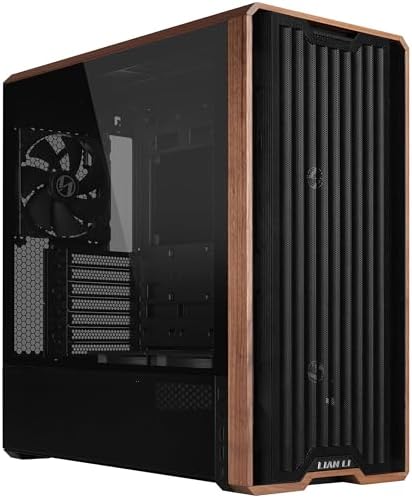
The Phanteks XT Pro Ultra is the pick, at £76.99 on Amazon UK at the time of writing (October 2026): four 140 mm D-RGB fans in the box, enough for the three-in, one-out layout of an RTX 5070-class build, and mounts for ten 120 mm fans when the build grows. It is the value pick in the mid tower guide.

Phanteks XT Pro Ultra specifications
- Form factor: Mid tower, about 51.8 litres, 7.55 kg
- Fans included: 4 x 140 mm D-RGB
- Fan mounts: 10 x 120 mm or 6 x 140 mm (140 mm: 3 front, 2 top, 1 rear)
- Radiators: 360 mm top, 240 mm front, 120 mm rear
- GPU clearance: 415 mm; CPU cooler: 184 mm
- Front USB-C: Yes; back-connect boards: Yes
Phanteks lists 184 mm of CPU cooler clearance, 415 mm for graphics cards and support for MSI Project Zero, ASUS BTF and Gigabyte Project Stealth boards, and the D-RGB lighting runs from a built-in controller without software. Phanteks backs the case with a 5-year limited warranty. The limit to know is the front: it takes a 240 mm radiator at most, so a 360 mm AIO has to go in the roof, where it works as exhaust.
Phanteks XT Pro Ultra - pros and cons
Where to buy
Check price
At a glance
Radar · 0-100 scores
- Phanteks XT Pro Ultra (black)
- MAG Forge 320R Airflow
- Lian Li Lancool 217 (black)
- NZXT H6 Flow (black)
Verdict
Three or four case fans are enough for most gaming PCs: front intakes, one rear exhaust and slightly positive pressure. Six or more pay off only with a 575 W RTX 5090. The Phanteks XT Pro Ultra at £76.99 and the MSI MAG Forge 320R Airflow at £69.98 ship with four fans each, which costs less than a fanless case plus a fan pack.
Every case size is ranked in Best PC case UK 2026, with RTX 5090 cases in Best full tower PC case UK 2026. The cooler inside the airflow is the next question: Is an AIO better than an air cooler?
Frequently asked questions
How many case fans does a gaming PC need?
A gaming PC needs three or four case fans: two or three front intakes and one rear exhaust. Three suit a budget build with a 145 W RTX 5060, four suit an RTX 5070-class build, and an RTX 5090 build needs six to nine. The Phanteks XT Pro Ultra ships with four 140 mm fans for £76.99 on Amazon UK at the time of writing (October 2026).
Is positive or negative air pressure better in a PC?
Slightly positive pressure is better for most gaming PCs. With more air coming in than going out, the surplus escapes through gaps in the panels, so dust enters only through the filtered intakes. Negative pressure pulls unfiltered air in through every gap instead. Three front intakes and one rear exhaust give positive pressure in any mesh-front mid tower, such as the MSI MAG Forge 320R Airflow.
Should top case fans be intake or exhaust?
Top case fans should be exhaust in almost every gaming PC. Warm air rises, and both the graphics card and the CPU cooler push heat upwards, so top fans remove it alongside the rear fan. A 360 mm AIO radiator on the roof also works as exhaust. The Phanteks XT Pro Ultra takes three 120 mm or two 140 mm fans on top, according to Phanteks.
Are two case fans enough?
Two case fans, one front intake and one rear exhaust, are enough for a budget build with a graphics card of around 145 W, such as an RTX 5060, in a mesh-front case. The NZXT H5 Flow ships with exactly that layout. A third fan at the front is the cheapest upgrade: a single ARCTIC P12 Pro costs £6.25 on Amazon UK at the time of writing (October 2026).
Is it cheaper to buy a case with fans included?
Usually, yes. The Phanteks XT Pro Ultra costs £76.99 with four 140 mm fans, while a fanless Corsair 3500X plus a £42.80 ARCTIC P12 PWM PST five-pack costs £101.17 on Amazon UK in October 2026, £24.18 more. The saving comes from bundles: the white Corsair 3500X with three RS120 ARGB fans costs £31.62 more than the fanless black one, more than a £29.99 triple pack.
How many case fans does an RTX 5090 build need?
An RTX 5090 build needs six to nine case fans. NVIDIA rates the GeForce RTX 5090 at 575 W of total graphics power, 2.3 times the 250 W RTX 5070, and an open-air card leaves that heat inside the case. Five intakes at the front and bottom, with a rear fan and three top fans or a 360 mm radiator as exhaust, suit a large case such as the Phanteks NV7 D-RGB.