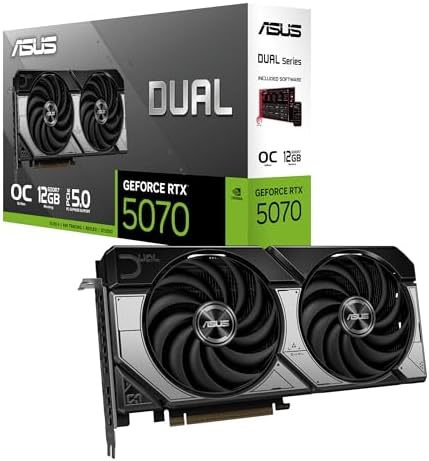


RTX 5070 or 5080?
The RTX 5070 is better value for most 1440p PCs; compare 12GB and 16GB GDDR7, board power and the £738.13 UK price gap before choosing a 4K RTX 5080.
On this page
At a glance
The RTX 5070 is the better value for most 1440p PCs; the RTX 5080 suits a buyer who specifically wants more 4K headroom. The ASUS Dual RTX 5070 OC costs £699.00 and ASUS Prime RTX 5080 OC costs £1,437.13 on Amazon UK at the time of writing (November 2026). The £738.13 premium is 105.6% of the 5070 price, while the 5080 adds 4GB GDDR7, a 33.3% capacity increase.
Tom’s Hardware representative GPU-tier averages put RTX 5070 at 96.4 fps raster and 51.5 fps ray tracing at 1440p, versus 128.3 fps and 74.0 fps for RTX 5080. At 4K, the averages are 54.3 and 22.7 fps for RTX 5070, versus 77.4 and 42.1 fps for RTX 5080. These hierarchy figures represent GPU tiers, not ASUS board-specific tests. NVIDIA lists the RTX 5070 with 12GB GDDR7 on a 192-bit interface and the RTX 5080 with 16GB on 256-bit. The faster model also has more processing resources and bandwidth. Those differences support a higher performance tier, but they do not mean every game or resolution scales by a fixed percentage. Compare independent reviews at the settings you use.
See Tom’s Hardware GPU hierarchy and NVIDIA’s RTX 50 family specifications and RTX 5080 product page. The prices are Amazon UK listing observations from 12 November 2026.
What changes between RTX 5070 and RTX 5080?
The 5080 raises memory from 12GB to 16GB GDDR7 and widens the interface from 192-bit to 256-bit. NVIDIA’s reference specifications also list 10,752 CUDA cores for RTX 5080 against 6,144 for RTX 5070. That is a 75% difference in listed core count, but core counts alone do not predict game frame rates across different architectures, workloads or clock behaviour.
Board power matters to the build. NVIDIA’s reference figures list 360W for RTX 5080 and 250W for RTX 5070. ASUS recommends an 850W PSU for its Prime RTX 5080 OC; check the exact 5070 board’s manufacturer specification for its own system recommendation. A 5080 buyer may need a PSU or case upgrade, raising the real cost beyond the card’s £1,437.13 listing.
Partner board details also differ. The selected 5070 is ASUS Dual; the 5080 is ASUS Prime OC. Their dimensions and cooling are not a controlled comparison. Confirm number of slots, length, connector position and warranty on the ASUS product pages before ordering.
What does the £738.13 price gap buy?
At the observed prices, the 5080 costs 2.056 times the 5070. Its sticker price per GB of VRAM is £89.82, compared with £58.25 for the 5070. That is not a performance-per-pound measure: VRAM capacity is only one attribute, and the two cards have different compute capability, power and cooling.
| GPU | Price | Memory | Price per GB |
|---|---|---|---|
| RTX 5070 | £699.00 | 12GB | £58.25 |
| RTX 5080 | £1,437.13 | 16GB | £89.82 |
For a 1440p buyer, spending £738.13 elsewhere can improve the monitor, CPU or storage. A 4K buyer who intends to use demanding settings may prefer the extra GPU tier. The practical decision is clear: the premium is substantial, and its value depends on pixel load and use rather than a headline score.
Which GPU suits 1440p and 4K?
Choose RTX 5070 for a balanced 1440p build; consider RTX 5080 when 4K, ray tracing or demanding creative workloads use its extra resources. A 4K frame contains 8.29 million pixels, against 3.69 million at 1440p, about 2.25 times as many. That raises rendering demand, although actual load depends on game settings, anti-aliasing and upscaling.
Do not use a single benchmark as a universal promise. Compare named independent testing that states the game, resolution, settings, CPU, driver and whether DLSS or frame generation is enabled. The manufacturer’s specifications establish configuration, not independent performance. A 1080p monitor is unlikely to justify this 5080 premium for gaming alone.
The RX 9060 XT 16GB is £619.99 in the current Amazon UK listing and provides another 16GB option. It is a separate AMD GPU tier, so capacity is not proof it matches RTX 5080 performance. See our best graphics cards guide and RTX 5070 versus RX 9070 XT comparison for context.
Radar · 0-100 scores
- ASUS Dual GeForce RTX 5070 OC
- ASUS Prime GeForce RTX 5080 OC
- ASUS Dual Radeon RX 9060 XT 16GB
Raster and ray-tracing axes use representative GPU-tier averages from Tom's Hardware, not tests of these partner boards. Other axes use published specifications.
Which card should UK buyers choose?
Buy RTX 5070 for 1440p value; buy RTX 5080 for a high-end 4K build if the £738.13 premium and higher PSU requirement fit the budget. Skip RTX 5080 when the display is 1080p or 1440p and the extra tier would force compromises elsewhere. The ASUS Prime RTX 5080 card recommends an 850W PSU, so include system cost in the decision.
These are specification-based recommendations, not hands-on performance or noise tests. Before checkout, verify Amazon seller, ASIN, exact board and current price. For more UK options, read our 4K monitor guide as well as the graphics card shortlist.
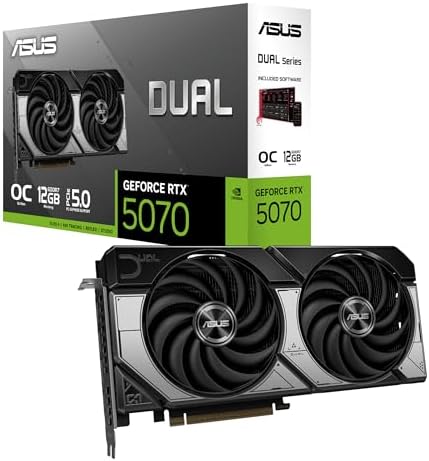
ASUS Dual GeForce RTX 5070 OC specifications
- gpu: GeForce RTX 5070
- architecture: Blackwell
- vram gb: 12
- vram type: GDDR7
- memory bus bit: 192
- cuda cores: 6144
- tdp w: 250
ASUS Dual GeForce RTX 5070 OC: buyer fit
Where to buy
Check price

ASUS Prime GeForce RTX 5080 OC specifications
- gpu: GeForce RTX 5080
- architecture: Blackwell
- vram gb: 16
- vram type: GDDR7
- memory bus bit: 256
- cuda cores: 10752
- tdp w: 360
ASUS Prime GeForce RTX 5080 OC: buyer fit
Where to buy
Check price
What is the verdict?
Choose RTX 5070 for the more proportionate £699.00 1440p build. Pay £1,437.13 for RTX 5080 when 4K headroom matters enough to justify £738.13 extra, its higher power requirement and suitable case clearance.
Frequently asked questions
Is RTX 5070 or RTX 5080 better value?
The RTX 5070 is better value for most 1440p gaming PCs; the RTX 5080 is for buyers who need more 4K headroom and can absorb the premium. The Amazon UK ASUS Dual RTX 5070 OC listing was £699.00 and the ASUS Prime RTX 5080 OC was £1,437.13 on 12 November 2026, a £738.13 difference.
How much VRAM do RTX 5070 and RTX 5080 have?
NVIDIA specifies 12GB GDDR7 for RTX 5070 and 16GB GDDR7 for RTX 5080. That is 4GB, or 33.3%, more capacity on the 5080. The extra memory does not make gaming performance 33.3% faster; game, resolution, power limits and settings affect results.
Is RTX 5080 twice as fast as RTX 5070?
No. The RTX 5080 costs more than twice the observed ASUS RTX 5070 listing, but price is not a performance benchmark. NVIDIA places the 5080 in a higher tier and gives it more compute resources and memory bandwidth. Compare independent tests at the resolution and games you play before treating the premium as worthwhile.
Should I buy RTX 5070 for 1440p?
The RTX 5070 is the more proportionate pick for a 1440p display if the £699.00 listing fits the budget. NVIDIA specifies a 12GB GDDR7 configuration. Check independent game tests for the exact settings and upscaling mode; no single frame-rate figure applies to every game or PC.
Is RTX 5080 worth it for 4K?
The RTX 5080 is worth considering for a 4K build that needs high settings or ray tracing headroom and has a suitable PSU and case. Its observed UK price was £1,437.13, £738.13 above the RTX 5070. Buyers should compare that cost with the value of a 4K monitor and the rest of the system.
What power supply does an RTX 5080 need?
The ASUS Prime RTX 5080 OC product specification recommends an 850W power supply, while a reference RTX 5070 system calls for less. The exact PSU recommendation depends on the board and whole PC. Check ASUS’s specification sheet, connector requirements and chassis clearance before buying the card.