
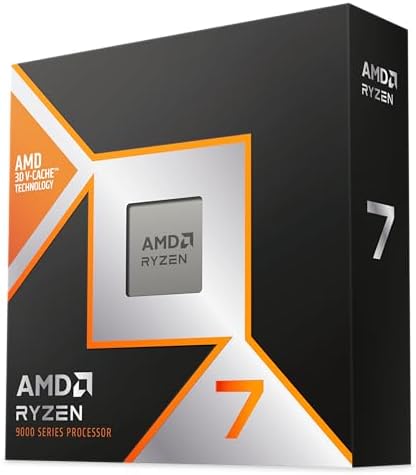

What CPU TDP really means
What is CPU TDP? AMD's TDP is a cooling rating, PPT the real limit at 1.35 times TDP, Intel's PL2 up to 2 times PL1. Plus the most efficient CPUs of 2026.
On this page
CPU TDP is a cooling rating in watts, not the power a processor draws. A Ryzen 7 9800X3D has a 120 W TDP and a 162 W power limit, and TechPowerUp measured about 65 W in games, so buyers should size coolers and power supplies to the limit and compare efficiency on measured watts. The parent guide to the chips themselves is Best CPU for gaming UK 2026.
| Situation | Read this figure | Why |
|---|---|---|
| Sizing a CPU cooler | PPT (AMD) or PL2 (Intel) | The cooler must clear peak power: 162 W on a Ryzen 7 7800X3D, 250 W on a Core Ultra 7 270K Plus |
| Sizing a power supply | PPT or PL2, plus the graphics card and 100 W | TDP understates the load by 42 W on a 120 W Ryzen |
| Comparing efficiency | Measured gaming watts | The Ryzen 7 7800X3D draws about 46 W in games against a 120 W TDP |
| Comparing AMD with Intel | Neither TDP figure | AMD's TDP is a cooling rating and Intel's is a base power |
What is the difference between TDP, PPT and PL2?
TDP is the cooling target, PPT is AMD's real power ceiling, and PL1 and PL2 are Intel's sustained and burst limits. AMD defines TDP as the case temperature minus the ambient temperature, divided by the cooler's thermal resistance, according to GamersNexus' breakdown, so electrical power is not in the formula. AMD then sets PPT at 1.35 times TDP on its sockets.
| Processor | Rated figure | Power limit | Limit / rated |
|---|---|---|---|
| Ryzen 5 9600X | 65 W TDP | 88 W PPT | 1.35 |
| Ryzen 7 7800X3D and Ryzen 7 9800X3D | 120 W TDP | 162 W PPT | 1.35 |
| Ryzen 9 9950X3D | 170 W TDP | 230 W PPT | 1.35 |
| Core Ultra 5 250K Plus | 125 W PL1 | 159 W PL2 | 1.27 |
| Core Ultra 7 270K Plus | 125 W PL1 | 250 W PL2 | 2.00 |
The ratio is the useful number. AMD's chips all sit at 1.35, from the 65 W Ryzen 5 9600X (88 W) up to AM5's 170 W ceiling (230 W). Intel's varies: the Core Ultra 5 250K Plus bursts to 1.27 times its rating, while the Core Ultra 7 270K Plus bursts to 2.00 times, so Intel's 125 W label hides a gap of 125 W.
What does TDP mean for coolers and power supplies?
Coolers and power supplies need the limit, not the TDP. Take an RTX 5070 Ti, which NVIDIA rates at 300 W with a 750 W power supply requirement. Compare Electronic's sum adds the card, the processor limit and 100 W for the rest, and with a Ryzen 7 7800X3D at 162 W it gives 562 W, or 75% of 750 W. Using the 120 W TDP gives 520 W and understates the load by 42 W.
Intel changes the answer. A Core Ultra 7 270K Plus at 250 W takes the same build to 650 W, 87% of 750 W, which is why How many watts PSU do I need recommends a larger unit for it. Cooler buyers face the same peak: the 7800X3D ships without a cooler, and whether an air tower or a liquid unit handles 162 W is covered in Is an AIO better than an air cooler.
Radar · 0-100 scores
- AMD Ryzen 7 7800X3D
- AMD Ryzen 7 9800X3D
- AMD Ryzen 5 9600X
- Intel Core Ultra 7 270K Plus
Which are the most energy-efficient gaming CPUs in 2026?
The Ryzen 7 7800X3D is the most energy-efficient gaming CPU of these four: TechPowerUp measured about 46 W in games, 38% of its 120 W TDP, against about 65 W for the Ryzen 7 9800X3D. The Core Ultra 7 270K Plus averaged 111 W in Baldur's Gate 3 in PC Gamer's review. The sources use different games, so the figures indicate scale and not exact ratios.
| Processor | Price | TDP / PL1 | Limit | Gaming draw (source) | Hierarchy score | Points per watt |
|---|---|---|---|---|---|---|
| Ryzen 7 7800X3D | £282.99 | 120 W | 162 W | 46 W (TechPowerUp) | 85.6% | 1.86 |
| Ryzen 7 9800X3D | £374.99 | 120 W | 162 W | 65 W (TechPowerUp) | 97.0% | 1.49 |
| Ryzen 5 9600X | £160.97 | 65 W | 88 W | 63 to 97 W by game (WePC) | 72.6% | n/a |
| Core Ultra 7 270K Plus | £289.00 | 125 W | 250 W | 111 W (PC Gamer) | 77.5% | 0.70 |
The Ryzen 7 7800X3D delivers 2.7 times the hierarchy points per gaming watt of the Core Ultra 7 270K Plus. The scores come from Tom's Hardware's August 2026 gaming hierarchy, and the watts from the named sources, so the ratio mixes two measurements. The gap in running cost is simple: 65 W less for 3 hours of gaming a day is 71 kWh a year, to be multiplied by the unit rate on the buyer's bill.
Which efficient CPU should you buy?
The Ryzen 7 7800X3D costs £282.99 on Amazon UK at the time of writing (October 2026), the least of the 8-core X3D chips, and it draws the least in games.

AMD Ryzen 7 7800X3D specifications
- Cores / threads: 8 / 16
- Clock speed: 4.2 GHz base, 5 GHz boost
- Cache: 96 MB L3
- TDP: 120 W, power limit 162 W
- Socket: AM5
- Cooler in the box: No
AMD Ryzen 7 7800X3D - pros and cons
Where to buy
Check price
Alternatives
Verdict
TDP is a cooling label, so buyers should read the power limit for coolers and power supplies and measured gaming watts for efficiency. On those terms the AMD Ryzen 7 7800X3D at £282.99 is the most efficient gaming CPU in this comparison. The wider ranking by speed is in Best CPU for gaming UK 2026, and the memory to pair with these AM5 chips is in Best RAM for gaming UK 2026.
Frequently asked questions
What is CPU TDP?
CPU TDP (thermal design power) is a cooling specification in watts, not a measure of how much power a processor draws. AMD defines it from the case temperature, the ambient temperature and the cooler's thermal resistance. A Ryzen 7 9800X3D has a 120 W TDP, but its package power limit is 162 W. Buyers should size a cooler to the limit, not the TDP.
What is the difference between TDP and PPT?
TDP is the cooling rating and PPT (package power tracking) is the maximum power an AMD processor will draw on the socket. AMD sets PPT at 1.35 times TDP on AM5: 65 W gives 88 W, 120 W gives 162 W and 170 W gives 230 W. The Ryzen 5 9600X is rated 65 W TDP and can draw 88 W.
What are PL1 and PL2 on Intel processors?
PL1 is the sustained power limit, which Intel publishes as Processor Base Power, and PL2 is the short-burst limit, published as Maximum Turbo Power. The Intel Core Ultra 7 270K Plus has a 125 W PL1 and a 250 W PL2, so its burst limit is 2.0 times its rated figure. The Core Ultra 5 250K Plus is rated 125 W and 159 W.
Does TDP tell me how much power a CPU uses in games?
No. Games rarely load every core, so measured draw sits well below TDP. TechPowerUp measured about 46 W in games for the Ryzen 7 7800X3D, 38% of its 120 W TDP, and about 65 W for the Ryzen 7 9800X3D. PC Gamer recorded an average of 111 W for the Core Ultra 7 270K Plus in Baldur's Gate 3.
Which CPU is the most energy efficient for gaming in 2026?
The Ryzen 7 7800X3D is the most energy-efficient gaming CPU in this comparison, at about 46 W in games according to TechPowerUp and £282.99 on Amazon UK at the time of writing (October 2026). The Ryzen 7 9800X3D draws about 65 W and is 11.4 points faster in Tom's Hardware's hierarchy. The Core Ultra 7 270K Plus draws more for less gaming speed.
Does TDP matter when choosing a power supply or cooler?
Use the power limit, not TDP, for both. For a power supply, add the graphics card's rated power, the CPU's PPT or PL2, and 100 W for the rest. An RTX 5070 Ti at 300 W with a Ryzen 7 7800X3D at 162 W gives 562 W, 75% of a 750 W unit. A 250 W Core Ultra 7 270K Plus raises it to 650 W.