

Is a tracker worth it?
Yes for buyers who want to move more or track sleep: tracker users walk about 1,800 more steps a day. What a phone misses, cost per year and picks from £42.99.
On this page
Is a fitness tracker worth it?
Yes, for anyone who wants to move more or track sleep: a 2022 umbrella review in The Lancet Digital Health found that tracker users walked about 1,800 more steps a day. A fitness tracker is not worth it for a smartwatch owner, or for someone who carries a phone everywhere and only wants a step count, because a phone counts steps almost as well.
The entry price is low. The Xiaomi Smart Band 10 costs £42.99 on Amazon UK at the time of writing (October 2026), or £14.33 a year over three years with no subscription. The ranked shortlist is in Best fitness tracker UK 2026, and screenless bands are compared in Google Fitbit Air vs WHOOP and Oura Ring.
| Situation | Worth it? | Pick | Price |
|---|---|---|---|
| Wants to walk more | Yes | Xiaomi Smart Band 10 | £42.99 |
| Wants to track sleep | Yes | Fitbit Air | £84.99 |
| Runs without a phone | Yes, with GPS | Amazfit Bip 6 | £79.99 |
| Already wears a smartwatch | No | The watch has the same sensors | £0 |
| Carries a phone everywhere, wants only steps | No | A phone app is within 6.7% | £0 |
What does a fitness tracker add over a phone?
A fitness tracker adds heart rate, sleep and the steps a phone never sees. A phone in a pocket counts steps well: in a 2015 JAMA research letter from the University of Pennsylvania, 14 adults walked 500 and 1,500 steps on a treadmill, and smartphone apps landed within -6.7% to 6.2% of the observed count, against -22.7% to -1.5% for wrist wearables. The catch is that a phone counts only while it is carried, and most phones spend the evening on a sofa arm or a desk.
Heart rate and sleep need a sensor on the skin. Every tracker in this post reads heart rate around the clock with an optical sensor, and a phone has none. For sleep, Robbins and colleagues (Sensors, 2024) compared a Fitbit Sense 2, an Oura Ring Gen3 and an Apple Watch Series 8 with polysomnography in 35 adults: all three detected sleep against wake with at least 95% sensitivity. Stages are rougher; the Fitbit overestimated light sleep by 18 minutes and underestimated deep sleep by 15 minutes.
| Measure | Phone | Fitness tracker |
|---|---|---|
| Steps while carried | Yes: apps within -6.7% to 6.2% (JAMA, 2015) | Yes: wearables within -22.7% to -1.5% |
| Steps with the phone on a desk | No | Yes |
| 24/7 heart rate | No sensor | Yes, optical sensor on all five picks |
| Sleep duration and stages | No sensor | Yes: at least 95% sleep vs wake sensitivity (Sensors, 2024) |
| Blood oxygen (SpO2) | No | Yes, all five picks |
| GPS for runs | Yes | Fitbit Charge 6 and Amazfit Bip 6 only |
The strongest case is behaviour, not accuracy. Ferguson and colleagues (The Lancet Digital Health, 2022) pooled 39 systematic reviews covering 163,992 people and found activity trackers linked to about 1,800 extra steps a day, 40 more minutes of walking and a weight loss of about 1 kg, with the benefit sustained over time.
What does a fitness tracker cost per year?
A fitness tracker with a free app costs £14.33 to £28.33 a year, and a subscription multiplies that by four to six. Compare Electronic's table spreads each Amazon UK price (11 October 2026) over three years and adds three years of any subscription at UK list prices: Google Health Premium at £7.99 a month on the Google Store, the Oura membership at £69.99 a year on Oura's site, and WHOOP One at £169 a year.
| Tracker | Device | Subscription | Per year | Per day |
|---|---|---|---|---|
| Xiaomi Smart Band 10 | £42.99 | None | £14.33 | 3.9p |
| Garmin vivosmart 5 | £79.95 | None | £26.65 | 7.3p |
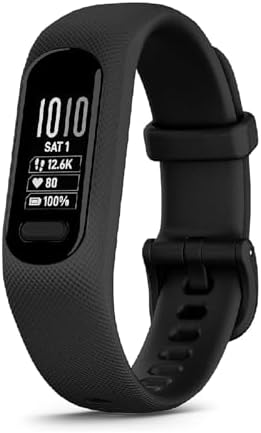
| Amazfit Bip 6 | £79.99 | None | £26.66 | 7.3p |
| Fitbit Charge 6 | £84.55 | None | £28.18 | 7.7p |
| Fitbit Air | £84.99 | None | £28.33 | 7.8p |
| Fitbit Air + Google Health Premium | £84.99 | £7.99 a month after a 3-month trial | £116.22 | 31.8p |
| Oura Ring 4 + membership | £244.00 | £69.99 a year | £151.32 | 41.5p |
| WHOOP One (WHOOP 5.0) | Included | £169.00 a year | £169.00 | 46.3p |
The five free-app bands sit within £14 a year of each other, so features should decide between them. The jump comes with a plan: WHOOP One costs 11.8 times as much per year as the Xiaomi Smart Band 10. The WHOOP case is made in Is WHOOP worth it?. The Fitbit Charge 6 listing on Amazon UK includes three months of Google Health membership, so a Fitbit buyer can try the coaching before paying for it.
Who is a fitness tracker worth it for?
A fitness tracker is worth it for a buyer with one clear job for it: walking more, sleeping better or running without a phone. Compare Electronic's table matches each buyer to the band that does that job for the least money.
| Buyer | Needs | Pick | Per year |
|---|---|---|---|
| A walker who wants a nudge to move more | Steps, reminders, a screen | Xiaomi Smart Band 10, £42.99 | £14.33 |
| A sleeper who dislikes screens | Sleep stages, heart rate, a small band | Fitbit Air, £84.99 | £28.33 |
| A runner who leaves the phone at home | Built-in GPS | Amazfit Bip 6, £79.99 | £26.66 |
| A buyer who wants GPS, ECG and Google Wallet in a band | Payments and heart rhythm checks | Fitbit Charge 6, £84.55 | £28.18 |
| A buyer who wants energy and stress scores on a slim band | Body Battery, Pulse Ox | Garmin vivosmart 5, £79.95 | £26.65 |
| An athlete who wants daily recovery coaching | Strain, recovery, long battery | WHOOP One, £169.00 a year | £169.00 |
Runners should check GPS first: the Fitbit Air, Garmin vivosmart 5 and Xiaomi Smart Band 10 borrow the phone's GPS, which is fine for a buyer who runs with a phone anyway. The trade-off is set out in Do I need a GPS watch for running?. A buyer who also wants apps, calls and payments on the wrist should weigh a smartwatch instead; see Is an Apple Watch worth it?.
Which fitness tracker should you buy?
The Xiaomi Smart Band 10 is the fitness tracker to buy first, at £42.99 on Amazon UK at the time of writing (October 2026). Xiaomi gives it a 1.72-inch AMOLED screen rated at 1,500 nits, up to 21 days of battery, heart rate, SpO2 and sleep tracking, and 5ATM water resistance, with no subscription.

Xiaomi Smart Band 10 specifications (Xiaomi)
- Display: 1.72-inch AMOLED, 1500 nits peak
- Battery: up to 21 days
- Sensors: optical heart rate, SpO2, sleep tracking
- Water resistance: 5ATM (50 m)
- Weight: 15.95 g
- GPS: none; uses the phone's GPS
- Works with: iPhone and Android
The Smart Band 10 covers what a first tracker needs: steps, heart rate, sleep and a screen bright enough to read outdoors. At £14.33 a year it is the cheapest way to find out whether a tracker changes a routine. Its compromises are no built-in GPS, no payments and no ECG app.
Xiaomi Smart Band 10 - pros and cons
Where to buy
Check price
Three alternatives add GPS, payments or Garmin's energy scores, at Amazon UK prices on 11 October 2026.
Also consider
Radar · 0-100 scores
- Smart Band 10
- Charge 6
- vívosmart 5 Small/Medium
- Bip 6 46mm
Verdict
A fitness tracker is worth it for a buyer who wants to move more or track sleep, and the evidence for the first is strong: about 1,800 extra steps a day. The Xiaomi Smart Band 10 at £42.99 is the low-risk first buy, and the Fitbit Charge 6 at £84.55 adds GPS and payments. The ranked shortlist is in Best fitness tracker UK 2026.
Frequently asked questions
Is a fitness tracker worth it?
Yes, for buyers who want to move more or track sleep. A 2022 umbrella review in The Lancet Digital Health found tracker users walked about 1,800 more steps a day and lost about 1 kg. The Xiaomi Smart Band 10 costs £42.99 on Amazon UK at the time of writing (October 2026), or £14.33 a year over three years with no subscription.
Is a fitness tracker more accurate than a phone for counting steps?
Not when the phone is carried. In a 2015 JAMA research letter, smartphone apps landed within 6.7% of observed treadmill steps and wrist wearables within 22.7%. A phone counts only the steps taken while it is in a pocket, so a fitness tracker such as the Xiaomi Smart Band 10 records more of the day, including steps around the house and office.
Can a phone track sleep as well as a fitness tracker?
No. A phone has no heart rate sensor, so it cannot estimate sleep stages the way a wrist tracker does. In a 2024 study in Sensors, a Fitbit Sense 2 detected sleep against wake with at least 95% sensitivity, but overestimated light sleep by 18 minutes. The Fitbit Air tracks sleep stages for £84.99 with no screen.
Do fitness trackers need a subscription?
Most do not. The Xiaomi Smart Band 10, Garmin vivosmart 5, Amazfit Bip 6 and Fitbit Charge 6 work in free apps. Google Health Premium is optional at £7.99 a month. The Oura Ring 4 needs a £5.99 monthly or £69.99 yearly membership for full insights, and the WHOOP 5.0 only works with a membership, from £169 a year.
What is the cheapest fitness tracker worth buying in the UK?
The Xiaomi Smart Band 10 is the cheapest fitness tracker worth buying, at £42.99 on Amazon UK at the time of writing (October 2026). Xiaomi rates it at up to 21 days of battery with a 1.72-inch AMOLED screen, heart rate, SpO2, sleep tracking and 5ATM water resistance. It has no built-in GPS; the Amazfit Bip 6 adds GPS for £79.99.
Do fitness trackers help you lose weight?
Modestly. The 2022 umbrella review in The Lancet Digital Health, covering 39 reviews and 163,992 participants, linked activity trackers to about 40 more minutes of walking a day and a weight loss of about 1 kg. The tracker records activity; diet decides most weight change. A £42.99 Xiaomi Smart Band 10 is enough to test the habit.