

Is a phone camera enough?
For most photos, yes. A camera wins on zoom, sport, low light and background blur, where an APS-C sensor has 5x a flagship phone's area. Sizes and UK prices.
On this page
For most photos, yes: a 2026 flagship phone is good enough for holidays, family pictures and social media in decent light. A dedicated camera earns its place for four jobs only, long zoom, fast sport, dim light and natural background blur, because an APS-C camera sensor has about 5 times the area of a flagship phone sensor.
The picks below match Best camera for beginners UK 2026, and the phones that come closest to a camera are ranked in Best camera phone UK 2026. Prices are Amazon UK at the time of writing (October 2026).
The test is simple. A buyer whose camera roll is mostly daylight scenes, food and people standing still already owns the right camera. A buyer who keeps zooming in on blurry wildlife, deleting dark party shots or wishing portraits looked less flat has hit a limit of sensor size, and no phone update fixes that.
| Situation | Verdict | Pick |
|---|---|---|
| Holidays, family, social media | Phone is enough | A flagship phone in good light |
| Distant wildlife, sport from the stands | Camera wins | Canon EOS R50 twin-lens kit, £949.97 |
| Indoor events, dim rooms, night | Camera wins | Fujifilm X-M5, £820.00 |
| Portraits with natural background blur | Camera wins | APS-C body plus a 50 mm f/1.8 prime |
| Pocket vlogging, talking to camera | Small gain | Sony ZV-1 II, £677.00 |
How much bigger is a camera sensor than a phone's?
A 1-inch compact sensor is 1.6 times the area of a flagship phone sensor, APS-C is 4.6 to 5.1 times and full frame is 11.9 times. Compare Electronic worked out each area from makers' figures. Samsung lists its ISOCELL HP2, a 200 MP phone sensor in the 1/1.3-inch format used by flagship phones, with 0.6 µm pixels, which gives 72 mm². Sony lists the ZV-1 II sensor at 13.2 x 8.8 mm, Canon the EOS R50 at 22.3 x 14.9 mm, Fujifilm the X-M5 at 23.5 x 15.6 mm and Sony the a7 IV at 35.9 x 23.9 mm.
| Sensor | Maker figure | Area | vs phone | Light gain | Price |
|---|---|---|---|---|---|
| Flagship phone, 1/1.3-inch (Samsung ISOCELL HP2) | 200 MP at 0.6 µm | 72.00 mm² | 1.0x | Baseline | Price of the phone |
| Sony ZV-1 II, 1-inch | 13.2 x 8.8 mm | 116.16 mm² | 1.6x | +0.7 stop | £677.00 (£5.83 per mm²) |
| Canon EOS R50, APS-C | 22.3 x 14.9 mm | 332.27 mm² | 4.6x | +2.2 stops | £949.97 (£2.86 per mm²) |
| Fujifilm X-M5, APS-C | 23.5 x 15.6 mm | 366.60 mm² | 5.1x | +2.3 stops | £820.00 (£2.24 per mm²) |
| Sony a7 IV, full frame | 35.9 x 23.9 mm | 858.01 mm² | 11.9x | +3.6 stops | Not in this guide |
Light gain is the area ratio expressed in stops; each stop doubles the light collected at the same framing and exposure. The Fujifilm X-M5 collects about 2.3 stops more light than a flagship phone sensor, which shows up as cleaner pictures indoors and at night. The 1-inch Sony ZV-1 II gains only 0.7 of a stop, and its £5.83 per mm² is more than twice the X-M5's £2.24. Phones close part of the gap with multi-frame processing, which works on still subjects and struggles with moving ones.
When does a camera beat a phone?
A camera beats a phone on zoom, low light, sport and background blur; a phone wins on convenience and quick sharing. Compare Electronic's table sets each job against the best phone figure and a beginner camera.
| Job | Flagship phone | Beginner camera | Winner |
|---|---|---|---|
| Zoom | Galaxy S26 Ultra: 111 mm optical (5x) | Canon EOS R50 with RF-S 55-210mm: about 336 mm equivalent | Camera, 3x the reach |
| Low light | 72 mm² sensor plus multi-frame processing | APS-C: 4.6x to 5.1x the area | Camera, by over 2 stops |
| Sport and moving subjects | Fast for single frames | Canon EOS R50: up to 15 fps electronic, 12 fps mechanical (Canon) | Camera |
| Background blur | Software portrait mode | Optical blur from a large sensor and f/1.8 prime | Camera |
| Everyday snaps and sharing | Always in the pocket, instant upload | Extra bag, transfer by app | Phone |
| Video for social media | 4K, strong stabilisation, instant edit | Better sound and lenses; more setup | Phone for most |
Zoom is the clearest gap. The Samsung Galaxy S26 Ultra's 5x periscope reaches 111 mm, while the RF-S 55-210mm lens in the Canon EOS R50twin-lens kit reaches about 336 mm equivalent on Canon's 1.6x APS-C sensor, three times further, with the large sensor behind it. Background blur is the other: a phone's portrait mode cuts the subject out in software and can blur hair and glasses, while a 50 mm f/1.8 prime on APS-C blurs the background optically.
Sport is where processing runs out. A phone builds its best pictures by merging several frames, which smears a child running or a ball in flight. Canon rates the EOS R50 at up to 15 fps with the electronic shutter and 12 fps with the mechanical shutter, with subject tracking that follows people, animals and vehicles across the frame. A buyer who mostly shoots school matches, dogs or birds will see the difference in the first week; a buyer who shoots friends at dinner and landscapes on holiday will not.
A phone keeps the edge for video shared the same day. Buyers whose main subject is talking to camera should read Best vlogging camera UK 2026, where the DJI Osmo Pocket 4 at £422.00 adds a 1-inch sensor and a 3-axis gimbal. Whether to step up to interchangeable lenses is covered in Is a mirrorless camera worth it?.
Which camera is a real step up from a phone?
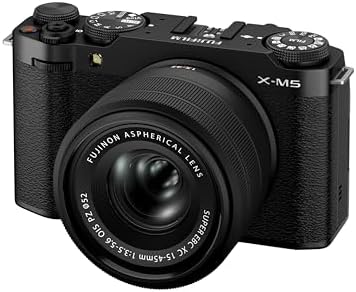
The Fujifilm X-M5 is the best step up from a phone, at £820.00 on Amazon UK at the time of writing (October 2026) with the XC15-45mm power zoom. Fujifilm lists a 26.1 MP APS-C X-Trans CMOS 4 sensor of 23.5 x 15.6 mm, 6.2K and 4K 60p video and a film simulation dial, in a body that weighs 355 g with battery and card.
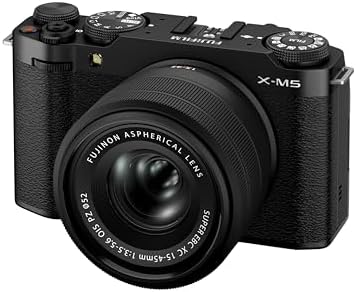
Fujifilm X-M5 specifications (Fujifilm)
- Sensor: 26.1 MP APS-C X-Trans CMOS 4, 23.5 x 15.6 mm
- Video: up to 6.2K, 4K at 60 fps
- Burst: up to 30 fps with the electronic shutter (1.25x crop)
- Screen: 3 inch vari-angle; no viewfinder
- Battery: 330 shots
- Weight: 355 g
- Stabilisation: digital only; no in-body stabiliser
The X-M5 gives 5.1 times a flagship phone's sensor area for the price of a mid-range phone, and the film simulation dial puts Fujifilm's colour looks on a physical control. The compromises are no viewfinder, no in-body stabilisation and a short 15-45mm kit zoom, so buyers who want reach should take the Canon EOS R50 twin-lens kit instead.
Fujifilm X-M5 - pros and cons
Where to buy
Check price
Also consider
Radar · 0-100 scores
- X-M5
- ZV-1 II
- EOS R50
Verdict
A flagship phone camera is good enough for most everyday photos, and a camera is worth buying only for zoom, sport, low light or optical background blur. The Fujifilm X-M5at £820.00 gives 5.1 times a phone's sensor area, and the Canon EOS R50twin-lens kit adds three times a phone's zoom reach. The full shortlist is in Best camera for beginners UK 2026.
Frequently asked questions
Is a phone camera as good as a real camera?
For daylight snaps, holidays and social media, a 2026 flagship phone matches a beginner camera. A dedicated camera still wins on long zoom, fast sport, dim light and natural background blur, because its sensor is far larger. The APS-C sensor in the Fujifilm X-M5 has about 5.1 times the area of a 1/1.3-inch flagship phone sensor, on Fujifilm's and Samsung's figures.
How big is a phone camera sensor compared with a camera?
A 1/1.3-inch flagship phone sensor covers about 72 mm², worked out from Samsung's figures for its 200 MP ISOCELL HP2 with 0.6 µm pixels. Sony's 1-inch sensor in the Sony ZV-1 II measures 116.16 mm², Canon's APS-C sensor in the Canon EOS R50 332.27 mm², and Sony's full-frame sensor in the a7 IV 858.01 mm².
Is a 1-inch compact camera better than a phone?
Only slightly. The Sony ZV-1 II has a 1-inch sensor of 116.16 mm², about 1.6 times a flagship phone's 72 mm², worth roughly two-thirds of a stop of light. Its 18-50 mm equivalent zoom reaches less far than a 5x periscope phone. The Sony ZV-1 II costs £677.00 on Amazon UK at the time of writing (October 2026) and suits vlogging more than stills.
Do phones zoom as far as cameras?
No. The Samsung Galaxy S26 Ultra's 5x periscope reaches 111 mm, among the longest optical zooms on a phone. The Canon EOS R50 twin-lens kit includes an RF-S 55-210mm lens, which reaches about 336 mm equivalent on Canon's 1.6x APS-C sensor, three times further. The Canon EOS R50 twin-lens kit costs £949.97 on Amazon UK at the time of writing (October 2026).
Why do camera photos have blurrier backgrounds than phones?
Larger sensors need longer lenses for the same framing, and longer lenses at wide apertures give a shallower depth of field. A phone fakes the effect with software in portrait mode, which can blur hair and glasses edges. An APS-C camera such as the Fujifilm X-M5 with a 50 mm f/1.8 prime produces the blur optically, with no cut-out edges.
What is the cheapest camera that beats a phone?
The Fujifilm X-M5 gives the most sensor per pound among Compare Electronic's picks: 366.6 mm² of APS-C sensor for £820.00 on Amazon UK at the time of writing (October 2026), or £2.24 per mm². The Sony ZV-1 II costs less at £677.00, but its 1-inch sensor works out at £5.83 per mm² and gains less over a phone.