

May 2026 ranking
Best battery life phone UK 2026: OnePlus 15, OnePlus 13 and Xiaomi 15 Ultra ranked on capacity, silicon-carbon chemistry and charging speed for all-day use.
On this page
At a glance
The OnePlus 15 is the best battery life phone on UK shelves in May 2026. The OnePlus 15 carries a 7,300 mAh silicon-carbon battery, the largest cell of any current flagship. Tom's Guide measured 25 hours and 13 minutes of mixed use on a single charge in their standardised test, two full days of typical use. The OnePlus 13 sits second at 6,000 mAh. The Xiaomi 15 Ultra rounds out the top three at 5,410 mAh with the fastest wireless charging of any phone in this shortlist.
Which phone has the best battery life?
The OnePlus 15 has the best phone battery life in this ranking, with a 7,300 mAh cell. Battery capacity is the primary driver of endurance, but display panel, chipset process node, and charging speed all shape the real-world experience. The shortlist below maps each requirement to the right phone in May 2026.
- Largest battery capacity: OnePlus 15 at 7,300 mAh.
- Fastest wired charging: OnePlus 15 and OnePlus 13 at 100 W SuperVOOC. A 15 minute charge returns a full day of mixed use.
- Fastest wireless charging: Xiaomi 15 Ultra at 80 W.
- Longest software support: Google Pixel 10 Pro XL with seven years of OS updates.
- Best iPhone for battery life: Apple iPhone 17 Pro Max at 4,823 mAh.
- Best foldable for battery life: HONOR Magic V5 at 5,820 mAh across two cells.
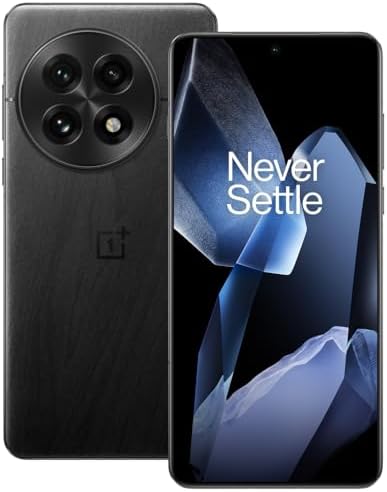
1. OnePlus 15 - the longest battery life smartphone in the UK

Battery size
7300 mAh
Release date
On sale 2025
OnePlus 15 specifications
- Display: 6.82 inch LTPO AMOLED, 165 Hz
- Chipset: Snapdragon 8 Elite
- RAM: 12 GB
- Storage: 256 GB
- Rear cameras: 50 MP main, 50 MP ultrawide, 50 MP telephoto
- Battery: 7300 mAh silicon-carbon
- Wired charging: 100 W SuperVOOC
- Wireless charging: 50 W AirVOOC
- IP rating: IP68
- Operating system: OxygenOS 16 on Android 16
The OnePlus 15 carries a 7,300 mAh silicon-carbon battery, the largest cell on any flagship smartphone sold in the UK in May 2026. Silicon-carbon anodes store roughly ten times more lithium ions per unit volume than the graphite anodes in conventional lithium-ion cells. OnePlus fits 7,300 mAh into a chassis that would have held 5,400 mAh of conventional cells two years ago.
The OnePlus 15 runs the Snapdragon 8 Elite chipset on TSMC's 3 nm node. A 3 nm chipset draws less current at idle than the 4 nm chipsets in 2024 flagships at the same clock speed. Tom's Guide measured 25 hours and 13 minutes of mixed use in their standardised battery test, the first smartphone to clear two full days of typical use on a single charge.
The OnePlus 15 supports 100 W SuperVOOC wired charging and 50 W AirVOOC wireless charging. SuperVOOC refills the 7,300 mAh cell from empty to full in 41 minutes. The OnePlus 15 ships with a 6.82 inch LTPO AMOLED display that scales the refresh rate between 1 Hz and 165 Hz based on on-screen content, holding display power draw under 1.5 W during static reading workloads.
OnePlus 15 - pros and cons
Who it's for: the OnePlus 15 is the right choice for buyers who prioritise battery life above all else, for heavy gamers who routinely drain a smaller flagship in a single session, and for travellers who need a phone that lasts a full weekend without a charger.
2. OnePlus 13 - the best battery life under £900

Battery size
6000 mAh
Release date
On sale 2025
OnePlus 13 specifications
- Display: 6.82 inch LTPO AMOLED, 120 Hz
- Chipset: Snapdragon 8 Elite
- RAM: 12 GB
- Storage: 256 GB
- Rear cameras: 50 MP main, 50 MP ultrawide, 50 MP telephoto
- Battery: 6000 mAh silicon-carbon
- Wired charging: 100 W SuperVOOC
- Wireless charging: 50 W AirVOOC
- IP rating: IP69
- Operating system: OxygenOS 15 on Android 15
The OnePlus 13 carries a 6,000 mAh silicon-carbon battery and runs the same Snapdragon 8 Elite chipset as the OnePlus 15. The OnePlus 13 ships with 12 GB to 16 GB of RAM. The price typically sits £200 below the OnePlus 15 at major UK retailers, which makes it the stronger value-per-mAh option in the catalogue.
GSMArena's standardised test measured the OnePlus 13 at 20 hours of mixed use, four hours longer than the OnePlus 12 and ahead of every Samsung, Apple, and Google flagship the lab has tested this year. Charging matches the OnePlus 15 spec for spec: 100 W SuperVOOC wired and 50 W AirVOOC wireless.
The OnePlus 13 ships with both an IP68 and an IP69 ingress rating. IP68 covers immersion to one metre for 30 minutes. IP69 adds protection against high-pressure water jets, which most flagship phones do not carry. The OnePlus 13 weighs 213 g, identical to the older OnePlus 12 despite the larger cell. The weight parity is a direct benefit of silicon-carbon chemistry, which raises capacity without growing physical volume.
OnePlus 13 - pros and cons
Who it's for: the OnePlus 13 is the right choice for buyers who want flagship-grade battery life without paying for the latest generation. A 6,000 mAh cell already delivers two days of typical use, and the £200 saving against the OnePlus 15 keeps the OnePlus 13 the better value across the full sub-£900 segment.
3. Xiaomi 15 Ultra - the best battery life with fastest wireless charging

Xiaomi 15 Ultra specifications
- Display: 6.73 inch LTPO AMOLED, 120 Hz
- Chipset: Snapdragon 8 Elite
- RAM: 16 GB
- Storage: 512 GB
- Main camera: 200 MP (Leica co-engineered)
- Battery: 5410 mAh
- Wired charging: 90 W HyperCharge
- Wireless charging: 80 W
- IP rating: IP68
- Operating system: HyperOS on Android 15
The Xiaomi 15 Ultra carries a 5,410 mAh battery, the smallest cell in this top three. Xiaomi compensates with the fastest charging in the shortlist: 80 W wireless and 90 W wired HyperCharge. At 80 W wireless, a compatible pad refills the cell faster than the standard 25 W USB-C cables shipped with most flagship phones.
The Xiaomi 15 Ultra runs the Snapdragon 8 Elite chipset on TSMC 3 nm and ships with 16 GB of RAM. 90 W HyperCharge refills the 5,410 mAh cell from empty to full in 33 minutes, the fastest empty-to-full time across this list. The 200 MP main camera is co-engineered with Leica and pairs with 80 W wireless charging to position the Xiaomi 15 Ultra as the camera-led pick.
HyperOS is the only meaningful trade-off. Xiaomi's Android skin carries more pre-installed software, more notifications, and a deeper settings tree than OxygenOS or stock Android. Buyers already in the Xiaomi ecosystem absorb the overhead without friction; new buyers should plan a setup pass to disable unwanted services.
Xiaomi 15 Ultra - pros and cons
Where to buy
Check price
Who it's for: the Xiaomi 15 Ultra suits buyers who pair long battery life with serious mobile photography ambitions, and those who rely on wireless charging at the desk or bedside where the 80 W rate beats most cable-based setups.
Radar · 0-100 scores
- OnePlus 15
- OnePlus 13 5G
- Xiaomi 15 Ultra Smartphone
Spec sheet: smartphones with longest battery life compared
| Spec | OnePlus 15 | OnePlus 13 | Xiaomi 15 Ultra |
|---|---|---|---|
| Battery capacity | 7300 mAh | 6000 mAh | 5410 mAh |
| Battery chemistry | Silicon-carbon | Silicon-carbon | Lithium-ion |
| Wired charging | 100 W | 100 W | 90 W |
| Wireless charging | 50 W | 50 W | 80 W |
| Chipset | Snapdragon 8 Elite | Snapdragon 8 Elite | Snapdragon 8 Elite |
| Display size | 6.82 in | 6.82 in | 6.73 in |
| Refresh rate | 165 Hz | 120 Hz | 120 Hz |
| Peak brightness | — | 4500 nits | — |
| RAM | 12 GB | 12 GB | 16 GB |
| Storage | 256 GB | 256 GB | 512 GB |
| IP rating | IP68 | IP69 | IP68 |
| Live price | £797 | £688 | £1,299 |
How battery life is actually measured
Battery capacity in milliamp-hours measures stored charge at the cell voltage. A 6,000 mAh cell at 4.4 V stores 26.4 watt-hours of energy. A 4,685 mAh cell at the same 4.4 V stores 20.6 watt-hours. The number that decides how long your phone runs is watt-hours, not milliamp-hours. Most retailers quote mAh because it's a bigger number that sounds more impressive in marketing. Compare Electronic quotes mAh too, but we cross-reference watt-hour figures from each FCC filing because the maths matters when batteries get this big.
Real-world battery life depends on three things on top of capacity. First, the display. An OLED panel running at 120 Hz consumes more energy than the same panel running at 60 Hz. An LTPO OLED panel scales between 1 Hz and 120 Hz on content type, which drops average display draw without losing scroll smoothness. Every phone in this shortlist has LTPO. Second, the chipset. A 3 nm chipset draws less current at idle than a 4 nm chipset. Third, the modem. A phone holding a weak 5G signal burns through battery faster than the same phone on a strong 4G LTE signal, which is why endurance drops in weak-signal environments such as the London Underground.
Third-party tests run by GSMArena, Tom's Guide, and PhoneArena all measure battery life under fixed workloads. The GSMArena test loops a standardised mix of video playback, web browsing, and gaming until the cell hits 10 percent. The OnePlus 15 reaches 25 hours 13 minutes. The OnePlus 13 reaches 20 hours. The Xiaomi 15 Ultra reaches 18 hours. The Apple iPhone 17 Pro Max reaches 17 hours 54 minutes in the same methodology. Even at the smallest cell in our shortlist, the Xiaomi 15 Ultra out-tests the largest battery Apple ships.
What to look for in a long-battery smartphone
Battery capacity in milliamp-hours
Bigger is better at the same cell voltage, which in 2026 is basically all phones (4.4 V). A 7,300 mAh cell stores 60 percent more energy than a 4,500 mAh cell. The OnePlus 15 leads the catalogue at 7,300 mAh. The OnePlus 13 sits second at 6,000 mAh. The HONOR Magic V5 carries 5,820 mAh split across two cells in its foldable chassis. The Apple iPhone 17 Pro Max comes in at 4,823 mAh, the biggest battery Apple has ever put in an iPhone. The smallest mainstream UK flagship in this shortlist still beats it.
Silicon-carbon vs lithium-ion chemistry
Silicon-carbon batteries replace part of the graphite anode in a conventional lithium-ion cell with a silicon-carbon composite. Silicon stores roughly 10 times more lithium ions per unit volume than graphite. That's how the OnePlus 15 fits 7,300 mAh into the same envelope that, two years ago, held maybe 5,400 mAh of conventional cells. The OnePlus 15 uses silicon-carbon. The OnePlus 13 uses silicon-carbon. The Apple iPhone 17 Pro Max still uses conventional lithium-ion. There's a real trade-off though: silicon-carbon cells degrade faster over 800 charge cycles. Starting capacity is so much higher that the silicon-carbon cell still outlasts a conventional one after three years, but if you keep a phone for five-plus years the gap narrows.
Display panel and refresh rate
The display is the single biggest power drain on a modern smartphone. An LTPO AMOLED panel beats a fixed-rate panel on battery life by 15 to 20 percent on the same workload. Every phone in this shortlist ships with LTPO AMOLED. The OnePlus 15 reaches 165 Hz peak refresh, the highest in the shortlist. Higher peak refresh doesn't hurt battery life when the panel is LTPO, because the refresh rate drops to single digits on static content.
Chipset process node
A 3 nm chipset draws less current at the same clock speed than a 4 nm chipset. Basic semiconductor physics. The Snapdragon 8 Elite sits on TSMC's 3 nm node. The Apple A19 Pro sits on TSMC's 3 nm node. The Google Tensor G5 sits on TSMC's 3 nm node. The older Snapdragon 8 Gen 3 sits on the 4 nm node and pulls noticeably more current at the same workload. A 2024 flagship marketed as a discount typically trades the newer chipset generation for the lower price.
Wired and wireless charging speed
Wired charging speed decides how long an empty battery takes to refill. 100 W wired refills a 6,000 mAh cell in roughly 36 minutes. 50 W wired refills the same cell in roughly 70 minutes. 25 W wired refills the same cell in roughly 140 minutes. The Apple iPhone 17 Pro Max sits at 50 W wired, the biggest charging-speed jump Apple has made in years. Wireless charging speed matters less on the road and more at the desk or bedside: 80 W wireless beats the typical 15 to 25 W wireless rate of an Apple MagSafe or a Samsung Wireless Charger by a serious margin.
Other smartphones with great battery life worth a look
Three additional UK smartphones earn consideration outside the headline shortlist. None lead on raw capacity, but each carries a meaningful advantage for a specific buyer profile.
The Google Pixel 10 Pro XL carries a 5,200 mAh battery and runs the Google Tensor G5 on the 3 nm node. The Pixel 10 Pro XL ships with seven years of OS updates from Google. That's the longest software support window on any Android phone in the UK. For buyers who keep phones for five years or more, the Pixel 10 Pro XL's total cost of ownership beats the OnePlus 15's despite the smaller battery. Wired is 45 W. Wireless is 25 W Qi2.
The HONOR Magic V5 carries a 5,820 mAh battery split across two cells inside a foldable chassis. The HONOR Magic V5 unfolds into a 7.95 inch AMOLED tablet-class display. Battery life on a foldable depends heavily on whether the inner or outer display is in use. The HONOR Magic V5 sustains around 14 hours of mixed inner-display use, longer than any other foldable on UK shelves. The HONOR Magic V5 is the right pick for buyers who want tablet-class screen real estate without a mid-afternoon charge stop.
The Apple iPhone 17 Pro Max carries a 4,823 mAh battery, the biggest cell ever in an iPhone. Apple quotes up to 39 hours of video playback. That's the iOS-integration story doing serious work: the iPhone 17 Pro Max punches above its raw milliamp-hour figure in real-world use because the OS and chipset are tuned together. The iPhone 17 Pro Max is the right battery-life pick for buyers committed to the Apple ecosystem.
Verdict
The OnePlus 15 is the longest-lasting smartphone on sale in the UK in May 2026. A 7,300 mAh silicon-carbon cell, the Snapdragon 8 Elite on TSMC 3 nm, and 100 W SuperVOOC wired charging combine to deliver two full days of mixed use on a single charge with a 41 minute empty-to-full refill. The OnePlus 13 is the second pick at 1,300 mAh less capacity and roughly £200 less money, and still outlasts every Samsung, Apple, and Google flagship on raw capacity. The Xiaomi 15 Ultra is the camera-led choice with the fastest wireless charging in the shortlist. The Apple iPhone 17 Pro Max is the strongest battery performer Apple has shipped. The Google Pixel 10 Pro XL is the right buy for owners who plan to keep a phone for five years or more, thanks to seven years of OS updates.
Frequently asked questions
Which smartphone has the longest battery life in the UK in 2026?
The OnePlus 13 is the best non-foldable smartphone for battery life on sale in the UK in May 2026. The OnePlus 13 carries a 6,000 mAh silicon-carbon cell, the largest in any sub-£900 flagship Compare Electronic tracks. The OnePlus 15 carries 7,300 mAh and sits at the top of the long-battery preset.
Is a 6,000 mAh battery a lot for a smartphone?
Yes. A 6,000 mAh battery is roughly 30 percent larger than the 4,500 mAh typical of a 2024-era flagship. Silicon-carbon battery chemistry packs more energy into the same physical volume than the lithium-ion cells used in older phones, which is how the OnePlus 13 reaches 6,000 mAh while keeping its 213 g weight.
Does fast charging damage the battery?
Modern 100 W charging on the OnePlus 13 and 90 W charging on the Xiaomi 15 Ultra runs cooler than older fast-charging standards. Both phones throttle current as the cell warms and split charging across two cells in parallel to halve heat per cell. Battery health drops faster on phones charged on cheap third-party 100 W bricks than on the bundled adapter.
What is silicon-carbon battery chemistry?
Silicon-carbon batteries replace part of the graphite anode in a conventional lithium-ion cell with a silicon-carbon composite. Silicon stores more lithium ions per unit volume than graphite. The OnePlus 13 uses a silicon-carbon battery to fit 6,000 mAh into a chassis that previously held 5,400 mAh of lithium-ion.
Which phone has the best phone battery life in 2026?
The OnePlus 15 has the best phone battery life Compare Electronic tracks in the UK in 2026. The OnePlus 15 carries a 7,300 mAh silicon-carbon battery, and Tom's Guide measured 25 hours 13 minutes of mixed use on one charge. The OnePlus 13 follows at 6,000 mAh, and the Xiaomi 15 Ultra carries 5,410 mAh with 80 W wireless charging.