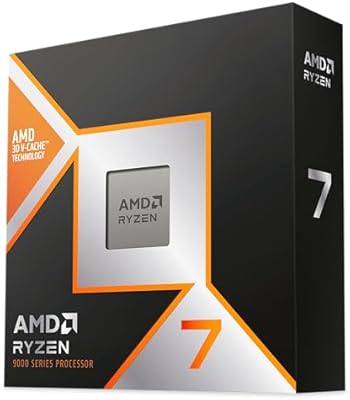
AMD Ryzen 9 7950X3D
AMD's 16-core AM5 dual-use flagship, pairing 3D V-Cache on one chiplet for gaming with a full second chiplet for heavy productivity, on a single chip.
We may earn a commission on purchases via this link. It never affects our scores or rankings.
Why we rate it
- Dual-CCD design: gaming and work
- 5.7 GHz boost on 16 cores
- 120W TDP, more efficient than 7950X
- AM5 with long upgrade path
- Gaming trails dedicated 8-core X3D chips
- Zen 5 9950X3D has superseded it
Where the AMD Ryzen 9 7950X3D wins and loses
Specifications
General info
Cores and threads
Clocks and cache
Integrated graphics
Power
Watch it in action
Is the AMD Ryzen 9 7950X3D right for you?
If you run Blender or video encoding for hours and then switch to gaming, the 7950X3D handles both properly. 16 full cores for work, V-Cache for gaming, without making any real compromise in either direction.
If gaming is your main workload, the 7800X3D or 9800X3D are faster and cheaper. If you're starting fresh, the 9950X3D offers Zen 5 improvements across the board on the same AM5 platform.
Before you buy
The chip has two chiplets (CCDs). One carries 3D V-Cache and handles gaming workloads. The other runs without V-Cache and handles productivity. Windows routes workloads automatically. The result is gaming performance close to dedicated X3D chips alongside full 16-core productivity.
The 9950X3D uses Zen 5 with IPC improvements, second-gen V-Cache, and an unlocked multiplier. At similar pricing, the 9950X3D wins. The 7950X3D is worth buying if it's at a meaningful discount.
Usually not. The 7800X3D's gaming-optimised 8-core V-Cache architecture is slightly faster in most gaming titles. The 7950X3D is better for dual-use builds where you also need heavy productivity throughput.
No. A 240mm AIO or quality tower cooler handles the 120W TDP comfortably.
Alternatives & similar cpus