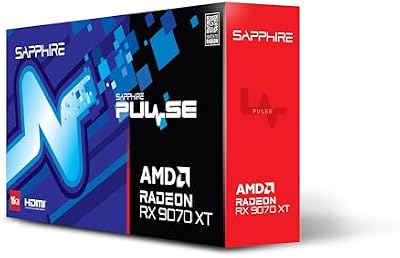
Home/Compare/Graphics Cards/Sapphire PULSE Radeon RX 7900 XTX
Sapphire

Sapphire PULSE Radeon RX 7900 XTX

Sapphire's value PULSE take on the RX 7900 XTX, a previous-gen flagship with 24GB of GDDR6 and a tidy 2.7-slot design, strong 4K raster value at a discount.

In stock24GB GDDR6RDNA 3 architecture2.7-slot 313mm384-bit memory busValue PULSE tier
Sapphire PULSE Radeon RX 7900 XTX
24GB GDDR6RDNA 3 architecture2.7-slot 313mm384-bit memory busValue PULSE tier
Compare prices

Affiliate links, your price stays the same. How we check prices →

Our verdict

A previous-gen flagship with 24GB VRAM and a compact 2.7-slot form, excellent value at a discount but weaker in heavy ray tracing.

75/100
vs. other previous-gen flagship 4K GPUs
Scored within its class as a previous-gen flagship raster card, not against current-gen RT-focused flagships or sub-£500 mid-range GPUs.
Best price found
£1,399
30-day low £1,399 · Average £1,399
See £1,399 deal at Amazon Uk

What we think

Swipe or tap to explore what we like, what to watch for, and who it's for

How it performs & what it pairs with

Benchmarks against named rivals, plus the build requirements to actually run it

Benchmarks
4K ultra settings, upscaling where applicable
Call of Duty (4K ultra, no RT)
Sapphire PULSE RX 7900 XTX
128 fps avg
RTX 4080 SUPER
122 fps avg
RTX 5080
150 fps avg
Cyberpunk 2077 (4K ultra, RT off)
Sapphire PULSE RX 7900 XTX
92 fps avg
RTX 4080 SUPER
97 fps avg
RTX 5080
116 fps avg
Cyberpunk 2077 (4K ultra, RT ultra, upscaling Quality)
Sapphire PULSE RX 7900 XTX
45 fps avg
RTX 4080 SUPER
62 fps avg
RTX 5080
81 fps avg
Test bench

Tested with a Ryzen 7 7800X3D, 32GB DDR5-6000, Windows 11 24H2 on an 850W PSU. Latest driver at time of testing.

Build compatibility
What your PC needs
Power supply
Sapphire recommends 800W for the 7900 XTX. With a power-hungry CPU, a quality 850W unit gives more headroom against the 355W TDP and transient spikes.
Case clearance
Tidy 2.7-slot 313mm form fits more mid-towers than the chunkiest flagship variants. Still check GPU clearance for compact builds before buying.
Power connectors
Uses standard 8-pin PCIe connectors rather than 12VHPWR. Works with any modern quality PSU with the required cables, no melting connector concerns.
Motherboard slot
Standard PCIe 4.0 x16 slot. Works on PCIe 5.0 boards with no performance difference at this card's bandwidth.
!
AMD driver maturity
AMD launch drivers have historically had more day-one issues than Nvidia's, though they stabilise. Keep drivers updated, especially for brand-new game releases.

Performance breakdown

Scored relative to the class, not against flagship models

vs. other previous-gen flagship 4K GPUs
75/100
Best in class scored 94
Class average 80
Lowest in class 64
4K rasterisation90 / 100
Strong 4K raster, trading blows with the RTX 4080 SUPER
1440p rasterisation96 / 100
Overkill for 1440p, very high frame rates
Ray tracing62 / 100
2nd-gen RDNA 3 RT, trails Nvidia in heavy path tracing
VRAM headroom95 / 100
24GB matches the RTX 4090, class-leading

Who this is right for

Picture yourself in these scenarios. How well does this fit?

Value 4K raster gamer
Plays modern AAA at 4K raster without prioritising heavy ray tracing, at the lowest sensible pricing. The value PULSE delivers strong 4K raster with 24GB VRAM in a tidy form.
Excellent fit
VRAM-hungry creator
Uses the card for memory-bound creative workloads alongside gaming. The 24GB VRAM is genuinely useful for Blender, video, and modded games at value pricing.
Good fit
High-refresh 1440p gamer
Plays at 1440p high refresh with everything cranked. The 7900 XTX is overkill for 1440p but delivers very high frame rates with plenty of headroom.
Okay fit
Heavy ray tracing fan
Wants the best ray tracing in heavy path-traced titles. RDNA 3's 2nd-gen RT trails Nvidia significantly. An RTX card or current RDNA 4 makes more sense for RT priorities.
Look elsewhere

What every spec actually means

Numbers translated into real-world impact

vram_gb24

Massive memory pool matching the RTX 4090. Genuinely useful for 4K gaming, modded titles, and memory-bound creator workloads. Plenty of headroom for years of texture-heavy releases.

slots2.7

More compact than some premium 7900 XTX partner cards. The 2.7-slot form fits in more mid-towers than the chunkiest flagship variants, useful for tighter builds.

length_mm313

Reasonably sized for a flagship. Needs a mid-tower with decent GPU clearance, but fits more cases than the largest 7900 XTX partner cards. Check dimensions before buying.

cuda_cores12288

AMD lists 12288 stream processors here. Plenty of shader horsepower for strong 4K rasterisation in modern AAA, trading blows with the RTX 4080 SUPER in raster.

memory_bus_bit384

Wide memory bus delivering around 960 GB/s of bandwidth with the 24GB of GDDR6. Ample for 4K gaming and memory-bound workloads at high resolutions.

Complete specifications

Verified across manufacturer datasheets and retailer spec tables

All specs
slots
2.7
2.5 to 3.5 slots typical, this is compact at 2.7
tdp w
355
300 to 360W class range, this is at 355
vram gb
24
16 to 24GB at this tier, this is at the top at 24GB
gpu chip
Navi 31
·
length mm
313
300 to 340mm typical, this is at 313
cuda cores
12288
·
hdmi count
1
1 to 2 typical, this has 1
memory type
GDDR6
GDDR6 or GDDR6X at this tier, this is GDDR6
architecture
RDNA 3
·
hdmi version
2.1
HDMI 2.1 standard across class
release year
2022
·
base clock mhz
2330
·
lithography nm
5
4nm or 5nm typical, this is 5nm
memory bus bit
384
256 to 384-bit at this tier, this is at the top at 384-bit
boost clock mhz
2525
2400 to 2600 MHz typical, this is 2525
displayport count
2
2 to 3 typical, this has 2
memory speed gbps
20
20 to 23 Gbps class range, this is 20
ray tracing cores
96
·
displayport version
2.1
DP 2.1 standard at this tier
psu recommendation w
800
750 to 850W typical, this is 800
memory bandwidth gbps
960
700 to 1000 GB/s class range, this is 960
ray tracing generation
2nd Gen
·

Common questions

The things people ask before buying this product

Is the RX 7900 XTX still worth buying in 2026?

Yes at a clear discount for raster-focused 4K gaming. The 24GB VRAM and strong rasterisation hold up well. The main caveat is weaker ray tracing than Nvidia and no FSR 4 support.

Is the Sapphire PULSE 7900 XTX as good as premium variants?

Gaming performance is identical, since all 7900 XTX cards use the same chip. PULSE is Sapphire's value tier with solid cooling, more compact than premium Nitro+ variants but with similar fps.

Does the RX 7900 XTX support FSR 4?

No. The 7900 XTX is RDNA 3, which supports FSR 3 but not the newer RDNA 4-exclusive FSR 4. FSR 3 is good but trails current FSR 4 and DLSS 4 image quality in supported titles.

What PSU do I need for the Sapphire PULSE 7900 XTX?

Sapphire recommends 800W for the 7900 XTX. With a power-hungry CPU, a quality 850W unit gives more headroom against the 355W TDP and transient spikes.

Compare Electronic editors
Independent graphics cards comparison since 2025
Every product is scored against its own product class, not against flagship models. Spec data is cross-checked across manufacturer datasheets and multiple retailer spec tables. Prices are verified daily. We never rank by affiliate commission.
Read our methodology