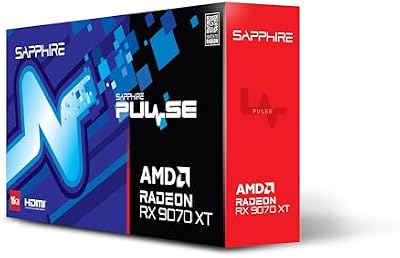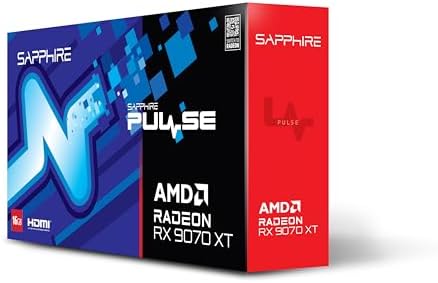
Sapphire PULSE RX 9070 XT
Sapphire's value PULSE take on the RX 9070 XT, a current-gen RDNA 4 card with 16GB of GDDR6 and a high boost clock for 1440p sweet-spot gaming at sensible pricing.
We may earn a commission on purchases via this link. It never affects our scores or rankings.
Why we rate it
- Excellent 1440p sweet-spot performance
- 16GB VRAM and FSR 4
- High 2970 MHz boost clock
- Value PULSE pricing
- Trails Nvidia in heavy ray tracing
- Substantial 304W TDP
Where the Sapphire PULSE RX 9070 XT wins and loses
Specifications
General info
Memory
Compute units
Power
Display outputs
Watch it in action
Sapphire PULSE RX 9070 XT vs PNY RTX 4070 Super 12GB
| SapphireSapphire PULSE RX 9070 XTThis page | PNYRTX 4070 Super 12GB | |
|---|---|---|
| Overall score | 75 /100 | 75 /100 |
| VRAM | 16 GBBetter | 12 GB |
| Boost clock | 2970 MHzBetter | 2505 MHz |
| Memory type | GDDR6 | GDDR6X |
| TDP | 304 W | 220 WBetter |
| Cuda cores | 4096 | 7168Better |
| Memory bus bit | 256Better | 192 |
Is the Sapphire PULSE RX 9070 XT right for you?
If you want strong 1440p ultra gaming with 16GB VRAM and FSR 4 at the lowest sensible 9070 XT pricing in Sapphire's dependable PULSE build, this is a strong raster value pick.
If you want the best ray tracing in heavy path-traced titles, the RTX 5070 Ti pulls ahead. RDNA 4 RT is much improved but still trails Nvidia in the most demanding RT scenarios.
Before you buy
For raster value, yes. The 9070 XT is competitive in rasterisation at typically lower pricing, with the same 16GB VRAM. The RTX 5070 Ti wins on heavy ray tracing and DLSS 4. Pick based on RT priorities.
Gaming performance is identical, since all 9070 XT cards use the same chip. PULSE is Sapphire's value tier with solid cooling, at the lowest sensible pricing. Premium variants add cooling and aesthetics.
The 9070 XT is meaningfully faster with more compute units, hitting the 1440p sweet spot squarely. The 9070 is a touch cheaper with the same 16GB VRAM. The XT is worth the small premium for most buyers.
Sapphire recommends 700W. With a power-hungry CPU, a quality 800W unit gives more headroom against the 304W TDP and transient spikes.
Alternatives & similar graphics cards