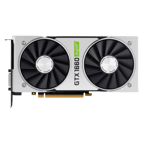
GeForce GTX 1660
MSI's GTX 1660, a Turing-era entry-level card with 6GB of GDDR6, now a used-market option for budget 1080p builds and older esports titles.
We may earn a commission on purchases via this link. It never affects our scores or rankings.
Why we rate it
- Capable of older AAA and esports
- GDDR6 memory technology
- Standard 8-pin PCIe power
- TWIN FROZR 7 cooling stays quiet
- No ray tracing, no DLSS
- Only 6GB VRAM
Where the GeForce GTX 1660 wins and loses
Specifications
Memory
GeForce GTX 1660 vs NVIDIA GeForce GTX 1660 Super
| MSIGeForce GTX 1660This page | NVIDIAGeForce GTX 1660 Super | |
|---|---|---|
| Overall score | 0 /100 | — /100 |
| VRAM | 6 GB | — |
| Memory type | GDDR6 | — |
Is the GeForce GTX 1660 right for you?
If you find a used 1660 at a genuinely low price (well under £100) and mainly play older esports or AAA from the late 2010s at 1080p, it's a reasonable stopgap for casual budget gaming.
If you want to play any current AAA game at decent settings with ray tracing or modern upscaling, the 1660's missing features and tight 6GB VRAM hold it back significantly. Modern alternatives are vastly better.
Before you buy
Only at a very low used price for budget esports or older AAA gaming. The missing DLSS and ray tracing support, plus the tight 6GB VRAM, make modern AAA difficult. Modern alternatives are vastly better for similar money.
No. The GTX 1660 is the non-RTX variant of Turing, with no ray tracing cores. Any game using RT will run with effects disabled. For RT, you need at least an RTX 20 series card.
No. DLSS requires Nvidia's tensor cores, which were removed from the GTX 1660 to keep costs down. Modern AAA games that use DLSS for performance can't access it on this card.
The 1660 SUPER uses faster GDDR6 memory and delivers meaningfully better performance for typically only slightly more on the used market. Worth the small price premium over the original 1660.
Alternatives & similar graphics cards