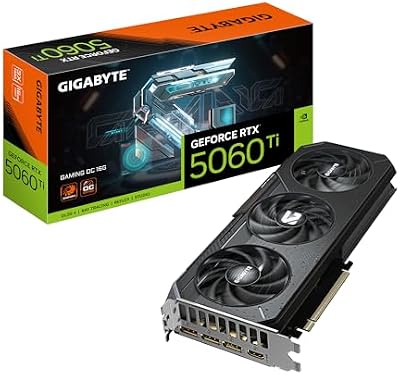
ASUS Dual RTX 4060 Ti Evo OC
ASUS's Dual EVO take on the RTX 4060 Ti, with a factory overclock, DLSS 3 Frame Generation, and Ada Lovelace ray tracing for sensible 1080p and 1440p builds.
We may earn a commission on purchases via this link. It never affects our scores or rankings.
Why we rate it
- DLSS 3 with Frame Generation
- Solid 1080p ultra and 1440p high
- Factory overclock out of the box
- ASUS Dual EVO build quality
- Only 8GB of VRAM
- Superseded by RTX 5060 Ti
Where the ASUS Dual RTX 4060 Ti Evo OC wins and loses
Specifications
Memory
Watch it in action
ASUS Dual RTX 4060 Ti Evo OC vs ASUS ASUS Prime RTX 5060 Ti OC Edition
| ASUSASUS Dual RTX 4060 Ti Evo OCThis page | ASUSASUS Prime RTX 5060 Ti OC Edition | |
|---|---|---|
| Overall score | 75 /100 | 75 /100 |
| VRAM | 8 GB | 16 GBBetter |
| Memory type | GDDR6X | GDDR7 |
Is the ASUS Dual RTX 4060 Ti Evo OC right for you?
If you want a solid 1080p ultra card with DLSS 3 support and you've found this at a meaningful discount versus the RTX 5060 Ti, the ASUS Dual EVO is a sensible mid-range pick.
If you want to game at 1440p ultra or you're keeping the card for 5+ years, 8GB VRAM and modest performance will hold you back. Look at the RTX 5060 Ti 16GB or step up further.
Before you buy
Only at a meaningful discount versus the RTX 5060 Ti 16GB. The 4060 Ti is still a capable mid-range card, but the 16GB variant or the newer 5060 Ti are smarter buys for longevity.
16GB. The extra VRAM is genuinely useful in newer texture-heavy games, even at 1080p ultra. The price premium for the 16GB version is small and well worth paying for longevity.
Yes at 1440p high with DLSS Quality enabled. 1440p ultra without upscaling stretches it, especially in newer titles where the 8GB VRAM is the constraint. Good entry 1440p card otherwise.
Nvidia recommends 550W, which is plenty for most builds. Any quality 550W or higher PSU from a reputable brand has comfortable headroom. Uses a single 8-pin PCIe connector.