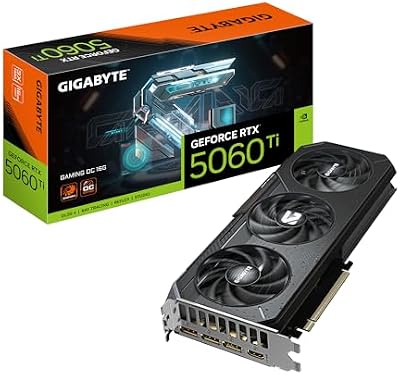
Radeon RX 9060 XT GAMING OC 16G
AMD's entry-mid RDNA 4 card, with 16GB of VRAM, a modest 160W power draw, and a high 3320 MHz boost clock for serious 1080p and 1440p gaming.
We may earn a commission on purchases via this link. It never affects our scores or rankings.
Why we rate it
- 16GB of VRAM at this tier
- Modest 160W TDP
- FSR 4 and RDNA 4 ray tracing
- Compact, sensible build
- 128-bit memory bus is narrow
- Driver day-one bugs are common
Where the Radeon RX 9060 XT GAMING OC 16G wins and loses
Specifications
General info
Memory
Compute units
Power
Display outputs
Watch it in action
Radeon RX 9060 XT GAMING OC 16G vs ASUS ASUS Prime RTX 5060 Ti OC Edition
| GigabyteRadeon RX 9060 XT GAMING OC 16GThis page | ASUSASUS Prime RTX 5060 Ti OC Edition | |
|---|---|---|
| Overall score | 75 /100 | 75 /100 |
| VRAM | 16 GB | 16 GB |
| Boost clock | 3320 MHz | — |
| Memory type | GDDR6 | GDDR7 |
| TDP | 160 W | — |
| Cuda cores | 2048 | — |
| Memory bus bit | 128 | — |
Is the Radeon RX 9060 XT GAMING OC 16G right for you?
If you're driving a 1080p 144Hz monitor or a 1440p panel, want plenty of VRAM, and care about modern features like FSR 4 and decent ray tracing, the 9060 XT 16GB is one of the strongest value picks around.
If you want native 4K with all settings maxed, or path-traced games like Cyberpunk with full RT, you'll need to step up to a 9070 XT or RTX 5070 Ti. This card can do entry 4K, but only with FSR doing serious work.
Before you buy
Yes, comfortably. Most modern games at 1440p high or ultra run at smooth frame rates, and FSR 4 adds extra headroom for the heaviest titles. Native 4K is a stretch though.
AMD recommends 500W, which is plenty for most builds. The card uses standard 8-pin PCIe connectors rather than 12VHPWR, so existing mid-range builds usually don't need a new PSU.
Close, with trade-offs. The 9060 XT often matches or beats it in rasterisation and offers better value per pound. The 5060 Ti leads in heavy ray tracing and has DLSS 4 multi-frame generation.
The dual-fan WINDFORCE design is fairly compact and fits most mid-tower and mATX cases. Always check your case's GPU length clearance, particularly in ITX or very small builds.
Alternatives & similar graphics cards