Home/Compare/CPUs/Intel 24 Core i9 14900KF Raptor Lake Refresh CPU/Processor
Intel

Intel 24 Core i9 14900KF Raptor Lake Refresh CPU/Processor

Intel's 14th-gen flagship without integrated graphics, with 24 cores, a 6 GHz Turbo Boost ceiling, and DDR4 or DDR5 flexibility for enthusiast gaming and creator builds.

In stock24 cores / 32 threads6.0 GHz boostLGA1700 socketDDR4 and DDR5No integrated graphics
Intel 24 Core i9 14900KF Raptor Lake Refresh CPU/Processor
24 cores / 32 threads6.0 GHz boostLGA1700 socketDDR4 and DDR5No integrated graphicsWatch review
Compare prices

Affiliate links, your price stays the same. How we check prices →

Our verdict

Intel's 14th-gen peak with a 6 GHz ceiling and 24 cores, but thermal demands and platform end-of-life mean you need a clear reason to buy it.

91/100
vs. other high-end LGA1700 desktop CPUs
Scored within its class as a high-end enthusiast desktop CPU, not against HEDT workstation chips or budget mainstream processors.
Best price found
£397
30-day low £396 · Average £396
See £397 deal at Amazon Uk

What we think

Swipe or tap to explore what we like, what to watch for, and who it's for

How it performs & what it pairs with

Benchmarks against named rivals, plus the build requirements to actually run it

Benchmarks
Default power limits, RTX 5080, DDR5-6000
Cinebench R23 multi-core
Core i9-14900KF
40200 pts
Ryzen 9 9950X
40000 pts
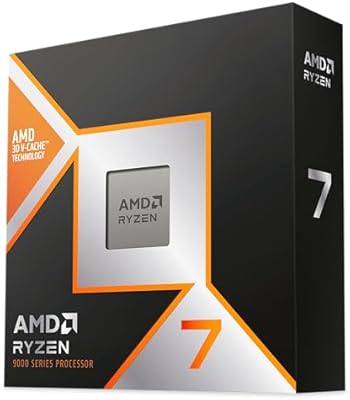
Ryzen 7 9800X3D
20400 pts
Counter-Strike 2 (1080p competitive)
Core i9-14900KF
490 fps avg
Ryzen 7 9800X3D
562 fps avg
Core i7-14700F
432 fps avg
Blender BMW render (lower is better)
Core i9-14900KF
28 seconds
Ryzen 9 9950X
28 seconds
Ryzen 7 9800X3D
48 seconds
Test bench

Tested with RTX 5080, 32GB DDR5-6000 (Z790 board), Windows 11 24H2. Default Intel power settings, latest microcode.

Build compatibility
What your PC needs
LGA1700 socket
Compatible with Intel 700 and 600 series boards. Z690 or Z790 required for overclocking. B660 or H670 boards lock the multiplier.
!
Demands serious cooling
Up to 253W max power under all-core load requires a 360mm AIO or top-tier air cooler like a Noctua NH-D15. Cheap coolers will throttle the chip significantly.
DDR4 or DDR5 depending on board
Platform accepts both. DDR5-6000 is fastest but DDR4-3600 works on compatible boards. Z690 boards often support both; Z790 usually DDR5 only. Check your specific board.
!
No integrated graphics
Discrete GPU required at all times. No display output without a dedicated graphics card. Make sure your GPU is ready before first boot.
!
Apply latest microcode first
Intel released microcode updates addressing 14th gen stability concerns. Update your BIOS to the latest version before running the chip at full performance settings.

Performance breakdown

Scored relative to the class, not against flagship models

vs. other high-end LGA1700 desktop CPUs
91/100
Best in class scored 100
Class average 76
Lowest in class 52
Gaming performance82 / 100
Very good gaming, but AMD V-Cache chips lead at 1080p
Multi-threaded performance96 / 100
24 cores excel in rendering, encoding, compilation
Single-threaded performance96 / 100
6 GHz Turbo Boost Max 3.0 leads in single-core tasks
Power efficiency48 / 100
Up to 253W max draw, one of the least efficient at full load

Watch it in action

Powered byYouTube

Who this is right for

Picture yourself in these scenarios. How well does this fit?

LGA1700 upgrader
Already on a Z690 or Z790 board and wants the fastest chip the platform supports. The 14900KF is the top of the LGA1700 stack with no further upgrades possible after this.
Good fit
Heavy creator and gamer
Runs Blender, video encoding, and gaming. 24 cores handle multi-threaded work well and the 6 GHz ceiling keeps gaming fast, though AMD's V-Cache chips lead in gaming specifically.
Good fit
Streaming and competitive gamer
Needs cores for OBS alongside gaming. The 14900KF handles both well, though AMD's 9800X3D beats it in gaming frame rates and runs cooler.
Okay fit
Fresh build buyer wanting upgrade path
Starting fresh and wants to upgrade the CPU in a few years. LGA1700 is a dead end. AM5 or LGA1851 make far more sense for a new build with long-term upgrade potential.
Look elsewhere

What every spec actually means

Numbers translated into real-world impact

boost_clock_ghz6

6 GHz via Turbo Boost Max 3.0 is the highest boost clock on any mainstream desktop CPU. Games and single-threaded tasks hitting the top cores feel genuinely fast.

core_count24

Eight Performance cores handle demanding single and multi-threaded work, while sixteen Efficiency cores handle background tasks. In practice, rendering and encoding scale well across all 24.

max_power_w253

The real power ceiling under all-core load, not the headline 125W. Demands a top-tier 360mm AIO or high-end air cooler plus a quality 1000W+ PSU to run reliably at sustained load.

memory_typeDDR5, DDR4

Works with either DDR4 or DDR5 depending on your motherboard. Reusing existing DDR4 avoids memory replacement costs. DDR5 is faster but adds cost on a new build.

p_cores8

Eight full Performance cores with Hyper-Threading, each contributing two threads. These are the fast cores that handle gaming, single-threaded workloads, and the most demanding tasks.

Complete specifications

Verified across manufacturer datasheets and retailer spec tables

All specs
aes
true
hardware AES acceleration standard on 14th gen
avx
AVX2
AVX2 standard across 14th gen
smt
true
HyperThreading standard on P-cores, E-cores have single threads
tdp w
125
125W base, but MTP reaches 253W under all-core load
family
Core i9
·
socket
FCLGA1700
LGA1700, end-of-life platform, no further CPU upgrades
chipset
Intel 700 Series, Intel 600 Series
Compatible with Intel 700 and 600 series boards, Z690/Z790 for OC
e cores
16
16 Efficiency cores, handle background tasks well
p cores
8
8 Performance cores with HyperThreading at up to 6 GHz
core count
24
24 total cores, highest on LGA1700 platform
generation
14th gen
14th gen Raptor Lake Refresh, Intel's last on LGA1700
max temp c
100
100°C junction max; runs close to this under all-core load
pcie lanes
20
20 PCIe lanes, standard for LGA1700
ecc support
true
ECC support present, rarely relevant for desktop gaming builds
l2 cache mb
32
32MB L2 across 24 cores
l3 cache mb
36
36MB L3, competitive though behind AMD V-Cache chips
max power w
253
253W MTP under all-core load, plan cooler and PSU accordingly
memory type
DDR5, DDR4
DDR4 or DDR5 supported depending on motherboard
x64 support
true
·
manufacturer
Intel
·
pcie version
5
PCIe 5.0 and 4.0 supported on Z690/Z790
release date
Q4'23
Q4 2023, available at reduced pricing as LGA1700 winds down
thread count
32
32 threads: 16 from P-cores, 16 from E-cores
max memory gb
192
192GB max, well above gaming needs
base clock ghz
3.2
3.2 GHz base; actual sustained clocks depend heavily on workload and power limits
lithography nm
10
Intel 10nm Enhanced SuperFin process
market segment
Desktop
·
virtualization
true
Intel VT-x virtualisation supported
boost clock ghz
6
6.0 GHz via Turbo Boost Max 3.0, highest on any mainstream desktop
memory channels
2
2-channel DDR4 or DDR5
unlocked multiplier
true
fully unlocked for P-core and E-core overclocking
memory speed max mhz
5600
5600 MHz DDR5 officially supported

Common questions

The things people ask before buying this product

What's the difference between the i9-14900K and i9-14900KF?

The KF variant has no integrated graphics, making it slightly cheaper. Everything else is identical. If you're buying a discrete GPU anyway, the KF is usually the better value unless the price gap is very small.

Does the i9-14900KF have stability issues?

Intel's high-end 14th gen chips had documented stability concerns related to elevated operating voltages. Apply the latest BIOS and microcode updates, and run within Intel's recommended default power settings rather than maximum performance profiles.

What cooler do I need for the i9-14900KF?

A 360mm AIO or a top-tier tower cooler like a Noctua NH-D15 is strongly recommended. Under all-core load at default power limits, this chip can draw up to 253W. Under-cooled builds will throttle.

Is LGA1700 still a good platform to build on?

For an upgrade to an existing LGA1700 build, yes. For a fresh build, no. Intel has moved to LGA1851 with Arrow Lake, and LGA1700 has no further CPU upgrade path available.

Compare Electronic editors
Independent cpus comparison since 2025
Every product is scored against its own product class, not against flagship models. Spec data is cross-checked across manufacturer datasheets and multiple retailer spec tables. Prices are verified daily. We never rank by affiliate commission.
Read our methodology