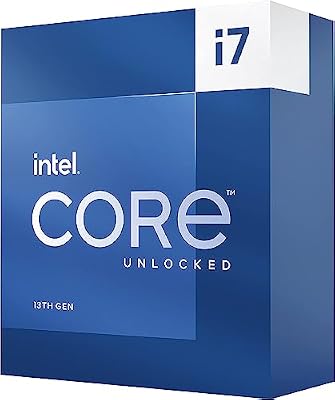
Core i7-13700
Intel's locked 13th-gen 16-core on LGA1700 with a 65W base TDP, DDR4 or DDR5 flexibility, and a sensible price below the unlocked 13700K.
We may earn a commission on purchases via this link. It never affects our scores or rankings.
Why we rate it
- 16 hybrid cores at a locked price
- 65W base TDP, manageable thermals
- 5.2 GHz boost for gaming
- DDR4 or DDR5 flexibility
- LGA1700 is end of life
- No cooler in the box
Where the Core i7-13700 wins and loses
Specifications
General info
Cores and threads
Clocks and cache
Memory
Power
Watch it in action
Is the Core i7-13700 right for you?
If you want 16-core 13th gen performance without paying K-series prices or managing higher thermal demands, the locked i7-13700 on a budget B760 board with DDR4 is a strong pick.
If you want CPU OC flexibility or maximum clock ceiling on LGA1700, the i7-13700K is the chip. The locked 13700 can't be pushed beyond its boost ceiling.
Before you buy
The 13700K has an unlocked multiplier for CPU overclocking and a higher 5.4 GHz boost. The 13700 has a locked multiplier, a 65W base TDP versus 125W, and a slightly lower 5.2 GHz boost. For most non-OC builds, the 13700 is the better value.
No. A 120mm or 240mm tower cooler handles the 65W base TDP comfortably. Under sustained all-core load it draws more than 65W, but gaming and mixed use sit well within a modest cooler's range.
Yes. The i7-13700 is compatible with Intel 600 and 700 series LGA1700 boards. A BIOS update may be needed on older 600-series boards for 13th gen support.
The 14700 has 20 cores and a higher 5.6 GHz boost at the same 65W base TDP. If pricing is similar, the 14700 offers more multi-threaded headroom. If the 13700 is meaningfully cheaper, it's still a very capable chip.
Alternatives & similar cpus