

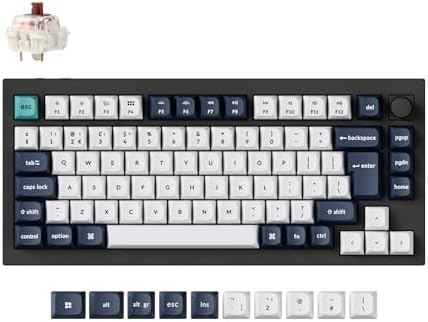
96% vs full-size
Both keyboard layouts keep a number pad. A 96% board compresses navigation keys and gaps; full-size keeps familiar spacing. Compare the practical difference.
On this page
At a glance
A 96% keyboard is the better fit when the number pad is essential but desk width is limited. Full-size is easier when a familiar, separated navigation cluster matters more than saving a few centimetres. Both keep a numpad, arrows and function row. The 96% layout compresses gaps and tightens key groups, so check Home, End and Delete positions before switching.
For a broader shortlist, see best 96 percent keyboard uk 2026. The related tkl vs full size keyboard guide covers the adjacent decision. Consult the manufacturer product specification before selecting a specific switch or regional layout.
| Keychron Q5 Max Wireless Custom Mechanical Keyboard | £219.99 on Amazon UK at the time of writing (October 2026) |
| Keychron V6 Max | £114.99 on Amazon UK at the time of writing (October 2026) |
| Keychron Q1 Max | £169.99 on Amazon UK at the time of writing (October 2026) |
| Keychron Q5 Max Wireless Custom Mechanical Keyboard | £219.99 on Amazon UK at the time of writing (October 2026) |
| Keychron V6 Max | £114.99 on Amazon UK at the time of writing (October 2026) |
| Keychron Q1 Max | £169.99 on Amazon UK at the time of writing (October 2026) |
Manufacturer specifications: Keychron Q5 Max Wireless Custom Mechanical Keyboard; Keychron V6 Max; Keychron Q1 Max.
Which option fits each use?
Keychron lists the Q5 Max at 408 mm wide and its full-size Q6 Max at 446 mm. The 38 mm difference is around 8.5% of the Q6 width: enough to alter mouse room on a crowded desk, without sacrificing the number pad. That is a model-specific calculation, not a universal standard. The compressed navigation arrangement is the main adaptation cost.
| Situation | Best fit | Reason |
|---|---|---|
| Q5 Max | 408 mm | 96%, numpad kept |
| Q6 Max | 446 mm | 100%, separated groups |
| Width saved | 38 mm | About 8.5% |
| Key clusters | Compressed | Check navigation positions |
Radar · 0-100 scores
- Keychron Q5 Max Wireless Custom Mechanical Keyboard
- Keychron V6 Max
- Keychron Q1 Max
What trade-offs matter?
The Q5 Max uses a 96% layout and supports hot-swap switches, QMK, 2.4 GHz, Bluetooth and wired connections. The V6 Max keeps a conventional full-size grouping, while Q1 Max removes the numpad as a 75% alternative. Choose 96% when figures are frequent and the desk is constrained; choose TKL if the pad is rarely used.
A low-risk way to judge the transition is to compare the top-down diagrams side by side and trace the keys used most: arrows, Delete, Home, End, Enter and the number pad. If the new positions require repeated reaches or layer shortcuts, the width saving may not repay the adjustment. A full-size board preserves familiar separation; a 96% board trades some of it for a narrower case.
Keyboard size, switch technology and key height are separate choices. A smaller footprint does not automatically mean low-profile switches, and a magnetic switch does not determine the layout. Check each feature against a normal working day. Confirm the UK ISO variant and whether the manufacturer’s configuration software supports the operating system used.
What should you buy?
A 96% keyboard is the better fit when the number pad is essential but desk width is limited. Full-size is easier when a familiar, separated navigation cluster matters more than saving a few centimetres. Both keep a numpad, arrows and function row. The 96% layout compresses gaps and tightens key groups, so check Home, End and Delete positions before switching. The Keychron Q5 Max costs £219.99 on Amazon UK at the time of writing (October 2026), checked on 27 October 2026.

Keychron Q5 Max Wireless Custom Mechanical Keyboard specifications
- Layout: 96%
- Switches: Linear · Tactile · Clicky
- Connection: Wireless
- Key material: PBT
- Polling rate: 1000
Keychron V6 Max and Keychron Q1 Max offer the alternatives. Their distinct layouts or switch designs matter more than a headline feature that will not be used.
Keychron Q5 Max Wireless Custom Mechanical Keyboard - strengths and limits
Where to buy
Check price
Verdict
A 96% keyboard is the better fit when the number pad is essential but desk width is limited. Full-size is easier when a familiar, separated navigation cluster matters more than saving a few centimetres. Both keep a numpad, arrows and function row. The 96% layout compresses gaps and tightens key groups, so check Home, End and Delete positions before switching. Make the choice from the keys used most often, desk dimensions and exact regional layout. Compare the wider buying guide and the related explainer.
For another useful comparison, read full-size mechanical keyboard guide.
Frequently asked questions
Does a 96% keyboard have a number pad?
Yes. A 96% keyboard retains a dedicated number pad while compressing the gaps and spacing between key groups. Keychron Q5 Max is the 96% example in this comparison; Keychron V6 Max keeps the more widely separated full-size arrangement. The key trade is width versus familiar spacing, not number-pad access.
Is a 96% keyboard smaller than full-size?
A 96% keyboard is usually narrower because it reduces gaps and tightens the navigation area while keeping the number pad. Keychron lists Q5 Max at 408 mm wide and Q6 Max at 446 mm, a 38 mm difference. That is a model-specific comparison; other keyboards vary in case dimensions.
What changes when switching from full-size to 96%?
The number pad remains, but arrow, navigation and typing clusters sit closer together on a 96% board. That can change where the hand expects Delete, Home or End. Compare a top-down layout image before changing from Keychron V6 Max to Q5 Max, then allow time to adapt to the compressed spacing.
Is a full-size keyboard easier to use than 96%?
Full-size is easier to navigate for someone who relies on traditional gaps between the typing, arrow and navigation blocks. A 96% board preserves the number pad in less width but asks the user to learn tighter spacing. Neither is universally easier; familiarity and desk constraints decide which compromise is preferable.
Which is better for spreadsheets, 96% or full-size?
Both layouts keep a dedicated number pad, so either can support regular spreadsheet entry. A 96% board saves width, while full-size preserves more separation around the navigation cluster. Keychron Q5 Max and V6 Max illustrate that difference. Choose based on desk space and whether compressed key spacing feels natural.
Does a 96% keyboard keep the function row?
Most 96% keyboards retain a physical function row as well as the number pad and arrow keys. Their key groups are compressed compared with full-size layouts, and some navigation keys may shift position. Check the manufacturer’s exact layout diagram for the model and regional variant before buying.